Muslim school already expanding
MERRILLVILLE: Plans in place for 7,000-square-foot addition
BY DEBORAH LAVERTYdlaverty@nwitimes.com219.662.5324
This story ran on nwitimes.com on Friday, April 7, 2006 12:48 AM CDT
MERRILLVILLE Less than two years after its opening, a school attuned to the religious and academic needs of the area's Muslim community is expanding.The 7,000-square-foot addition to Avicenna Academy, 9803 Colorado St., will include space for at least three more classrooms, a conference room, a library/book store, administration office and storage areas.
The school is located next to the Northwest Indiana Islamic Center and mosque, where the youngsters can go for daily prayers and religious services.It is the only school in the area offering Islamic instruction and the Arabic language to its students. Emphasis is placed on a high standard of excellence in academics, Assistant Director Nuha Rifai said.When the school opened in the fall of 2004, there were 19 students enrolled in preschool through second grade.Now there are 41 students from throughout Lake and Porter counties who attend.Third and fourth grades were added this year, and plans are to continue adding a grade each year until the school includes eight grades, Rifai said.Fifth-grade classes will be added this fall, when at least a portion of the expanded area will be completed, she said.If additional space is needed in the future, there is acreage to the east for building or there is the possibility of adding a second level, she said.The general contractor is Ali Rashad and the architect of record is Tom Kuhn, of Carras-Szany-Kuhn & Associates in Schererville.The emphasis will be on fundraising to pay for the new addition at the prayer service and groundbreaking today, and the annual gala dinner dance at 6 p.m. Saturday, Rifai said."We're hoping to motivate people to donate for the school expansion," she said. "We want to collect at least half of the $900,000."There are a number of ways members of the mosque, parents, grandparents and members of the community can support the school, she said.Engraved bricks, with the donor's name printed on them, can be purchased for a price ranging from $500 for a smaller version to $1,000 for a larger one.
Sunday, April 09, 2006


ISLAM: EUROPEAN IMAMS MEET IN VIENNA
Vienna, 7 April (AKI) - A conference of 150 Muslim leaders and imams from more than 40 European countries opened on Friday in the Austrian capital, Vienna. The three-day gathering will focus on issues affecting the Muslim communities in Europe, such as the creation of new jobs and the role of women. A key goal will be to hammer out an identity for European Muslims that preserves their traditions while integrating with Western political and social values.The gathering comes at a critical moment for the faith, under pressure from anti-terror probes and a perceived clash with Western values - highlighted by the recent Prophet cartoons crisis. The Second Conference of European Imams will be attended by clerics from Turkey to the United Kingdom, as well as Austria's president, Heinz Fischer, Chancellor Wolfgang Schuessel, European Commission president Jose Manuel Barroso, EU external relations commissioner Benita Ferrero Waldner, and EU Racism and Xenophobia Observatory chief, Beate Winkler, as well as the Islamic Scientific, Education and Cultural Organisation (ISESCO) director general Abdul-Aziz al-Tuweijiry. The meeting is being organised by Vienna's Islamic Religious Authority (IRA).Axel Byybu Koehler, president of Germany's Central Muslim Council, and representatives of Europe's main Muslim organisations will address the conference, where issues such as Islamic education, political participation, integration, the role of family, employment, the environment and ainmal rights will also be discussed.An estimated 15 million Muslims live in the European Union's 25 member states, forming approximately 3.3 percent of the bloc's population. There are 400,000 Muslims in Austria, some 4 percent of the population. Islam, which was officially acknowledged in Austria in 1912, is considered the country's second religion after Catholicism.
Friday, April 07, 2006

Muslim and Middle Eastern communities watch immigration debate from sidelines
DETROIT Hispanic immigrants have been at center stage as Congress debates whether to legalize undocumented immigrants or make it a felony to be one.They, their relatives and their supporters have taken to the streets for rallies in Michigan and across the country.
However, Michigan's large Muslim and Middle Eastern communities have been mostly quiet during the debate. But many of their members could be deeply impacted by the legislation.
Community leaders say immigrants from Muslim countries fear speaking out in a post-Nine-Eleven climate. But despite the lack of public demonstrations, they're watching the developments closely, with a mixture of hope and anxiety.
Copyright 2006 Associated Press. All rights reserved.

NBC Plants Muslims at NASCAR
April 06, 2006 09:31 AM EST
By Sher Zieve – NBC’s Dateline is reported to have planted Muslims at a NASCAR event, in order to uncover anti-Muslim sentiment. The NBC action is said to have been a “sting operation”.
NASCAR, who confirmed with NBC that it had purposefully sent “Muslim-looking men” and a camera crew to the race in an attempt to see if there would be ‘racist’ activities, said it is “outraged” at this attempt by NBC to create the news. NASCAR spokesman Ramsey Poston said Wednesday: "It is outrageous that a news organization of NBC's stature would stoop to the level of going out to create news instead of reporting news." There are no reports that anyone bothered the Muslim-looking men.
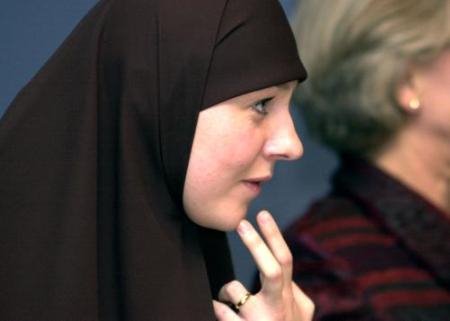

Algeria bans converting Muslims to other religions
Thu Apr 6, 2006 8:31 AM GMT
ALGIERS (Reuters) - Algeria, determined to keep religion and politics separate after years of Islamist violence, has passed a law forbidding non-Muslims from seeking to convert Muslims to another religion, an official said on Wednesday.
Mohamed Aissa, director of the ministry of religious affairs, told state radio the measure passed on March 20 was prompted by the activities of Christian evangelical sects, particularly in the restive ethnic Berber Kabylie region.
"We found out that in addition to Islam, Christianity has also been used as a tool to destabilise the country during the last bloody decade," said Aissa.
"Ten (Christian) sects are active in Algeria. They do not respect our laws. And some of these sects called for revolt in the Kabylie region," he said.
Algeria plunged into conflict when militants unleashed a holy war or jihad after the military cancelled legislative elections in 1992 that the radical Islamic Salvation Front was poised to win.
Authorities at the time feared an Iranian-style revolution, and an estimated 200,000 people were killed during the uprising.
The new law lays down sentences of five years in prison and a fine of between 5,000 and 10,000 dinars for non-Muslims who try to convert Muslims to another religion.
"Never forget that the use of Islam as a political tool produced more than 10 years of terrorism. We want to be immunised against the use of religion, all religions, in Algeria as political tools to destabilise the country," said Aissa.
SUBVERSIVE
Before the measure was passed, there was no legal barrier to the conversion of Muslims to other religions, although state officials generally viewed the practice as subversive.
Berbers, original inhabitants of North Africa before the Arab invasion in the 7th century and who make up a fifth of oil-producing Algeria's 33 million people, have campaigned for more language and cultural rights.
The Berber region was hit by unrest fuelled by the death of a schoolboy in police custody in 2001.
Algeria is almost totally Muslim. According to officials, no more than 5,000 Christians, including expatriates, live in the country of 33 million.
The Roman Catholic, Protestant and Seventh Day Adventist churches were the only non-Muslim faiths authorised to operate in the country, the U.S. State Department has said in a report on human rights in Algeria.
"We are inviting representatives from the three churches in Algeria for dialogue and an exchange of views so that we can prevent the use of religion for purposes that have nothing to do with religion," said Aissa.
Algiers' archbishopric representatives were not immediately available for comment. But one of its officials, Gilles Nicolas, said recently the law "is not very reassuring".
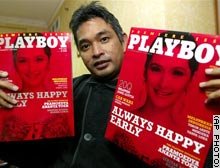
Tamer Playboy hits Jakarta newsstands
Islamic leaders denounce magazine, despite lack of nude women
Thursday, April 6, 2006; Posted: 11:00 p.m. EDT (03:00 GMT)
Publisher-director of Playboy Indonesia Erwin Arnada shows copies of the magazine's first edition.
JAKARTA, Indonesia (AP) -- A toned-down edition of Playboy magazine went on sale Friday in Indonesia, defying threats of protests by Islamic hardliners who called the publication a form of moral terrorism in the world's most populous Muslim nation.
The magazine does not feature nude women, and its photos of female models in underwear are no more risque than those in other magazines already for sale in the country. More explicit photos appear daily in local tabloids.
Protesters hit the streets in towns across Indonesia when the magazine announced in January it was planning a local version, but it remains to be seen whether demonstrations will pick up again after people have read it.
One hardline group, the Islamic Defenders Front, pledged to forcefully remove the magazines from shops.
"The first edition might be tame, but it will get more vulgar," said group spokesman Tubagus Muhamad Sidik. "Even if it had no pictures of women in it, we would still protest it because of the name."
Muslim leader Yusuf Hasyim said the magazine posed more of a threat to Indonesia than the terrorism from al Qaeda-linked militants that has killed more than 240 people in the sprawling country in recent years.
"This is a kind of moral terrorism that destroys the way of the life of the nation in a systematic and long-term way," state news agency Antara quoted Yusuf Hasyim as saying, calling on Muslim youth not to attack shops selling the magazine.
Playboy, which already has 17 international editions with content tailored to local tastes, played down the protest threats.
"Let the people look at it and see what they think. Hopefully they will accept it," said promotion manager Avianto Nugroho. "If there are demonstrations, we will try to meet their demands."
The magazine is unlikely to worry too much because if protests remain largely peaceful they will only boost sales. Nugroho denied speculation that by choosing to launch the magazine on Friday, the Islamic day of prayer, it was actively trying to trigger protests.
Most Indonesians practice a moderate form of Islam, and many women shun standard Middle Eastern forms of dress associated with Muslims. Many Indonesian women do not cover their heads and often dress in tight-fitting jeans and sleeveless tops.
Indonesian versions of Western magazines FHM and Maxim, which also contain photos of women in underwear, are already on sale.
Pornographic video compact discs, though illegal, are sold more or less openly at markets all over the country.
The magazine costs around $5 (€3.5), more than twice the minimum daily wage in Jakarta, but affordable to many middle- and upper-class city dwellers.
As well as two photo spreads of partially clothed women, the first edition includes an interview with internationally renowned Indonesian author Pramoedya Ananta Toer, and articles on East Timor after its break from Jakarta rule in 1999 and the development of Indonesian cartoons.
Copyright 2006 The Associated Press. All rights reserved.
Thursday, April 06, 2006
Bridges TV Cable Station
My family was probably the first family in Arizona, easily the first in southern Arizona to start subscribing to Bridges TV. In a little over a year, I have noticed the quality of the programming increase by leaps and bounds. Like anything else the first cable station dedicated to Muslim Americans appears to be a growth process that is in constant revolution. This is a good thing. I particularly enjoy the prominent scholar series every weekday morning. It is nice to have channel that the entire family can watch without the craziness that can be found on network TV or other pay TV channels. Not bad for $15 a month. It is also good because we need Muslim journalists and outlets for them, but that is another topic for another day. I'm glad that they are growing in viewership. Inshallah, more will benefit from this first step.
Muslim network expands to more than 1 million homes
April 5, 2006 - 4:57PM
BUFFALO, N.Y. (AP) - It was a premium pay-TV channel reaching ten-thousand households a year ago. Today, "Bridges TV" is a basic-cable offering on several cable and satellite systems, viewed in more than a million U.S. homes. "Bridges TV" features Muslim-American lifestyle and cultural programming. It can be seen in markets including Detroit, Chicago, Boston and Washington. The cable channel produces a daily, hour-long newscast at its studio in suburban Buffalo, New York. Broadcasts also include children's educational programming, current affairs, cooking and travel shows, soccer and cricket matches, documentaries and sitcoms. Ford Motor Company is a major sponsor. Bridgestv.com
Muslim network expands to more than 1 million homes
April 5, 2006 - 4:57PM
BUFFALO, N.Y. (AP) - It was a premium pay-TV channel reaching ten-thousand households a year ago. Today, "Bridges TV" is a basic-cable offering on several cable and satellite systems, viewed in more than a million U.S. homes. "Bridges TV" features Muslim-American lifestyle and cultural programming. It can be seen in markets including Detroit, Chicago, Boston and Washington. The cable channel produces a daily, hour-long newscast at its studio in suburban Buffalo, New York. Broadcasts also include children's educational programming, current affairs, cooking and travel shows, soccer and cricket matches, documentaries and sitcoms. Ford Motor Company is a major sponsor. Bridgestv.com
Church packed for Islam talk
By Citizen reporter
A talk by an Islamic leader on ten things Christians should know about Muslims was attended by more than 100 people at a village church.
Moulana Faruk Ali delivered the talk which was hosted by Rev Doug Smith at Hillside Methodist Church in Brinscall.
Among the subjects discussed were aspects of Muslim prayer, the fact that Jesus is seen as a prophet under Islam, fasting during Ramadan and the pilgrimages expected of all Muslims.
Rev Smith said: "Everyone present found out more of what it is like for Muslims in modern day Britain."
11:48am Wednesday 5th April 2006
By Citizen reporter
A talk by an Islamic leader on ten things Christians should know about Muslims was attended by more than 100 people at a village church.
Moulana Faruk Ali delivered the talk which was hosted by Rev Doug Smith at Hillside Methodist Church in Brinscall.
Among the subjects discussed were aspects of Muslim prayer, the fact that Jesus is seen as a prophet under Islam, fasting during Ramadan and the pilgrimages expected of all Muslims.
Rev Smith said: "Everyone present found out more of what it is like for Muslims in modern day Britain."
11:48am Wednesday 5th April 2006
Islamic curtain
A curtain that once veiled the Kaaba in Mecca, the holiest place in Islam, may fetch $700,000 when it's auctioned Wednesday in London, said Sotheby's Holdings Inc. Embroidered with gold and silver threads, the door curtain dates from 1909 and is being sold by a family that received it then from the sultan, Sotheby's said.
montrealgazette.com
A curtain that once veiled the Kaaba in Mecca, the holiest place in Islam, may fetch $700,000 when it's auctioned Wednesday in London, said Sotheby's Holdings Inc. Embroidered with gold and silver threads, the door curtain dates from 1909 and is being sold by a family that received it then from the sultan, Sotheby's said.
montrealgazette.com
The CW greenlights Muslim comedy pilot
Tuesday, April 4 2006, 21:27 BST - by Neil Wilkes
New US network The CW has greenlit production on the pilot for a potentially controversial new comedy, Variety reported on Tuesday.Aliens In America, written by Moses Port and David Guarascio (Just Shoot Me), follows a family who send their 16-year-old son on a foreign exchange program.Things "don't go as planned", however, when the exchange student turns out to be a Pakistani Muslim who "wears a kufi on his head and a shalwar kameez over his body".If it gets the greenlight for next season, the show is being tipped as a partner for freshman hit Everybody Hates Chris.
Tuesday, April 4 2006, 21:27 BST - by Neil Wilkes
New US network The CW has greenlit production on the pilot for a potentially controversial new comedy, Variety reported on Tuesday.Aliens In America, written by Moses Port and David Guarascio (Just Shoot Me), follows a family who send their 16-year-old son on a foreign exchange program.Things "don't go as planned", however, when the exchange student turns out to be a Pakistani Muslim who "wears a kufi on his head and a shalwar kameez over his body".If it gets the greenlight for next season, the show is being tipped as a partner for freshman hit Everybody Hates Chris.
Muslim Student Attacked On Baylor Campus
Muslim Student Attacked On Baylor Campus (Video)
(April 4, 2006)—The Washington-based Council on American-Islamic relations is calling on the FBI to probe at attack on a female Muslim student on the Baylor University campus as a hate crime.
The coed was attacked from behind Saturday evening as she walked to her dorm from the Student Union Building.
She told News Ten that her attacker was a white male who appeared to be in his 30s. She said she didn’t think the man was a Baylor student.
She said the man grabbed her headscarf and threw her to the ground, yelling profane ethnic and anti-Muslim slurs while threatening to kill her if she made any noise.
The man pinned her to the ground, she said, and dug his nails into her chest until she screamed.
When she screamed, she said the man slapped her in the face and kicked her twice in the ribs before he fled.
She required emergency room treatment for a dislocated shoulder and contusions.
She has left Baylor to return to her family’s home in a neighboring state to recuperate, the organization said.
She said she didn’t hear from university officials until Tuesday, three days after the attack.
She said she’s not sure whether she will return to Baylor.
CAIR says the attack should be taken seriously.
"Law enforcement authorities and university officials need to treat this disturbing incident with the seriousness it deserves," said CAIR Communications Director Ibrahim Hooper.
"Local, state and national leaders also need to speak out against the rising level of Islamophobic hate in our society that can lead to such attacks."
Baylor didn’t have an immediate comment on the incident, but did release a statement Tuesday evening saying the university is treating the incident “very seriously and is in the process of investigating the matter in cooperation with law enforcement agencies.”
“As a faith-based institution, Baylor is sensitive to, and very concerned about, the report of an assault involving ethnic or religious intolerance,” the statement said.
Muslim Student Attacked On Baylor Campus (Video)
(April 4, 2006)—The Washington-based Council on American-Islamic relations is calling on the FBI to probe at attack on a female Muslim student on the Baylor University campus as a hate crime.
The coed was attacked from behind Saturday evening as she walked to her dorm from the Student Union Building.
She told News Ten that her attacker was a white male who appeared to be in his 30s. She said she didn’t think the man was a Baylor student.
She said the man grabbed her headscarf and threw her to the ground, yelling profane ethnic and anti-Muslim slurs while threatening to kill her if she made any noise.
The man pinned her to the ground, she said, and dug his nails into her chest until she screamed.
When she screamed, she said the man slapped her in the face and kicked her twice in the ribs before he fled.
She required emergency room treatment for a dislocated shoulder and contusions.
She has left Baylor to return to her family’s home in a neighboring state to recuperate, the organization said.
She said she didn’t hear from university officials until Tuesday, three days after the attack.
She said she’s not sure whether she will return to Baylor.
CAIR says the attack should be taken seriously.
"Law enforcement authorities and university officials need to treat this disturbing incident with the seriousness it deserves," said CAIR Communications Director Ibrahim Hooper.
"Local, state and national leaders also need to speak out against the rising level of Islamophobic hate in our society that can lead to such attacks."
Baylor didn’t have an immediate comment on the incident, but did release a statement Tuesday evening saying the university is treating the incident “very seriously and is in the process of investigating the matter in cooperation with law enforcement agencies.”
“As a faith-based institution, Baylor is sensitive to, and very concerned about, the report of an assault involving ethnic or religious intolerance,” the statement said.
NSW Muslim Council 'not dumping mufti'
Tuesday Apr 4 13:31 AEST
The chairman of the NSW Muslim Council has rejected reports he wants to dump outspoken mufti Sheikh Taj Aldin Alhilali, describing him as a "good friend".
The Australian newspaper reported that a proposal by the NSW Muslim Council to redraw the constitution of the Australian Federation of Islamic Councils (AFIC) is aimed at deposing Sheikh Alhilali from his position as mufti of Australia.
Sheikh Alhilali has been the high-profile spiritual leader of the nation's 300,000 Muslims since 1989.
But NSW council chairman, Neil Kedomi, said the wide-ranging proposal, which will be put to a meeting of Islamic leaders later this month, is not a personal attack on Sheikh Alhilali.
"I have never had a problem with him, he's a good friend of mine," Mr Kedomi told AAP.
"He's the one who has helped me many times. He has the respect of 99.9 (per cent) of the committee and all the people ... who have positions in AFIC."
AFIC's chief executive, Amjad Mehboob, said the position of mufti is currently appointed in an "ad hoc manner", and the NSW Muslim Council's proposal looks to consolidate the position within AFIC's structure.
"The core purpose of the proposal is to formalise the position of the mufti within the structure of AFIC," Mr Mehboob said.
"As far as the mufti is concerned, that is, Sheikh Taj Aldin Alhilali, he is the mufti. This proposal is only going to consolidate his position," Mr Mehboob said.
Mr Kedomi said the proposal will act as an endorsement for Sheikh Alhilali.
"We (drew up) the proposal to make Sheikh Taj (Alhilali) attend the meetings and have a say in AFIC. The mufti ... is more wise than anybody else."
©AAP 2006
Tuesday Apr 4 13:31 AEST
The chairman of the NSW Muslim Council has rejected reports he wants to dump outspoken mufti Sheikh Taj Aldin Alhilali, describing him as a "good friend".
The Australian newspaper reported that a proposal by the NSW Muslim Council to redraw the constitution of the Australian Federation of Islamic Councils (AFIC) is aimed at deposing Sheikh Alhilali from his position as mufti of Australia.
Sheikh Alhilali has been the high-profile spiritual leader of the nation's 300,000 Muslims since 1989.
But NSW council chairman, Neil Kedomi, said the wide-ranging proposal, which will be put to a meeting of Islamic leaders later this month, is not a personal attack on Sheikh Alhilali.
"I have never had a problem with him, he's a good friend of mine," Mr Kedomi told AAP.
"He's the one who has helped me many times. He has the respect of 99.9 (per cent) of the committee and all the people ... who have positions in AFIC."
AFIC's chief executive, Amjad Mehboob, said the position of mufti is currently appointed in an "ad hoc manner", and the NSW Muslim Council's proposal looks to consolidate the position within AFIC's structure.
"The core purpose of the proposal is to formalise the position of the mufti within the structure of AFIC," Mr Mehboob said.
"As far as the mufti is concerned, that is, Sheikh Taj Aldin Alhilali, he is the mufti. This proposal is only going to consolidate his position," Mr Mehboob said.
Mr Kedomi said the proposal will act as an endorsement for Sheikh Alhilali.
"We (drew up) the proposal to make Sheikh Taj (Alhilali) attend the meetings and have a say in AFIC. The mufti ... is more wise than anybody else."
©AAP 2006
April 4, 2006
religion
Islam week delves into politics, perceptions
By Elizabeth Giorgi
Muslims are not terrorists.
The Muslim Student Association and Al-Madinah Cultural Center have collaborated for the week to address issues and stereotypes that portray the Islamic faith in a negative light.
Islam Awareness Week is not only a campus event, but also is recognized nationally. “Unpatriotic Religion” is the groups’ theme on campus describing what they call unfair treatment of Muslim Americans as a result of the Patriot Act.
This week is important because students have the opportunity to learn and get beyond the Muslim stereotypes depicted in the media, said Muslim Student Association President Mus’ab Husaini.
“Islam is the religion of peace, and we would like to present that idea and (that Muslims) are peaceful Americans,” he said. “We are as peaceful and democratic and peace-loving as any other people.”
Awareness is essential for people to learn and understand the misrepresentation of Muslims that stereotypes cause, Husaini said.
Students are known for pursuing knowledge, and University students have the opportunity to seek knowledge about Islam firsthand during a week such as this, he said.
One of the common stereotypes about Muslim women is that they are oppressed because of how they dress, but that is not the case, said Muslim Student Association Vice President Ayan Ali.
Also, the portrayal of a few Muslims in the media makes it seem as though all Muslims are terrorists, but that is not true, she said.
Ali said focusing on a larger picture of the Islamic faith can help students understand it.
“People need to open their eyes and be more objective when they want to learn about Islam, and TV is not the only place to look for their knowledge,” she said.
Augsburg College studio art senior Kim Jurek decided to attend the event after she heard the evening’s speaker, Imam Johari Abdul-Malik on Minnesota Public Radio on Monday morning.
Jurek said the topic of the Patriot Act sounded really interesting, and because she wasn’t Muslim, she thought it would be a good opportunity to learn something different.
Imam Johari Abdul-Malik is well-known for his work serving as the Muslim chaplain at Howard University in
Washington and was the first Muslim officially installed as a chaplain in higher education at Howard. He is the head of the National Association of Muslim Chaplains in Higher Education.
Abdul-Malik opened Monday evening’s speech by enforcing that he denounced all terrorism and explained the Patriot Act’s unfair targeting of Muslims.
“Terrorism knows no religion,” he said. “It is not part of any of our traditions.”
The Patriot Act was enacted after Sept. 11, 2001, to help counteract possible terrorist attacks on the United States.
There are many examples of people who have been denied their rights in this country through wiretapping and unwarranted searches of homes as part of the act’s measures to identify terrorists, Abdul-Malik said.
Problems with the act make it difficult to fight terrorism fairly, he said.
Islam Awareness Week is not the only time people should be trying to learn about the Islamic faith, how the Patriot Act affects it and trying to examine the truth behind the stereotypes, Ali said.
Rather, people should try to learn about Islam anytime they are able to, Ali said.
“With Islam you don’t need to go read a book about it, you need to experience it,” she said.
© Copyright 2006 The Minnesota Daily
religion
Islam week delves into politics, perceptions
By Elizabeth Giorgi
Muslims are not terrorists.
The Muslim Student Association and Al-Madinah Cultural Center have collaborated for the week to address issues and stereotypes that portray the Islamic faith in a negative light.
Islam Awareness Week is not only a campus event, but also is recognized nationally. “Unpatriotic Religion” is the groups’ theme on campus describing what they call unfair treatment of Muslim Americans as a result of the Patriot Act.
This week is important because students have the opportunity to learn and get beyond the Muslim stereotypes depicted in the media, said Muslim Student Association President Mus’ab Husaini.
“Islam is the religion of peace, and we would like to present that idea and (that Muslims) are peaceful Americans,” he said. “We are as peaceful and democratic and peace-loving as any other people.”
Awareness is essential for people to learn and understand the misrepresentation of Muslims that stereotypes cause, Husaini said.
Students are known for pursuing knowledge, and University students have the opportunity to seek knowledge about Islam firsthand during a week such as this, he said.
One of the common stereotypes about Muslim women is that they are oppressed because of how they dress, but that is not the case, said Muslim Student Association Vice President Ayan Ali.
Also, the portrayal of a few Muslims in the media makes it seem as though all Muslims are terrorists, but that is not true, she said.
Ali said focusing on a larger picture of the Islamic faith can help students understand it.
“People need to open their eyes and be more objective when they want to learn about Islam, and TV is not the only place to look for their knowledge,” she said.
Augsburg College studio art senior Kim Jurek decided to attend the event after she heard the evening’s speaker, Imam Johari Abdul-Malik on Minnesota Public Radio on Monday morning.
Jurek said the topic of the Patriot Act sounded really interesting, and because she wasn’t Muslim, she thought it would be a good opportunity to learn something different.
Imam Johari Abdul-Malik is well-known for his work serving as the Muslim chaplain at Howard University in
Washington and was the first Muslim officially installed as a chaplain in higher education at Howard. He is the head of the National Association of Muslim Chaplains in Higher Education.
Abdul-Malik opened Monday evening’s speech by enforcing that he denounced all terrorism and explained the Patriot Act’s unfair targeting of Muslims.
“Terrorism knows no religion,” he said. “It is not part of any of our traditions.”
The Patriot Act was enacted after Sept. 11, 2001, to help counteract possible terrorist attacks on the United States.
There are many examples of people who have been denied their rights in this country through wiretapping and unwarranted searches of homes as part of the act’s measures to identify terrorists, Abdul-Malik said.
Problems with the act make it difficult to fight terrorism fairly, he said.
Islam Awareness Week is not the only time people should be trying to learn about the Islamic faith, how the Patriot Act affects it and trying to examine the truth behind the stereotypes, Ali said.
Rather, people should try to learn about Islam anytime they are able to, Ali said.
“With Islam you don’t need to go read a book about it, you need to experience it,” she said.
© Copyright 2006 The Minnesota Daily

April 2, 2006
Rice Finds British Muslims Want to Give Her an Earful
By JOEL BRINKLEY
Correction Appended
BLACKBURN, England, April 1 — Secretary of State Condoleezza Rice faced more protests and public embarrassment here on Saturday that have turned a trip meant to be a friendly follow-up to an American trip by Foreign Secretary Jack Straw into a two-day run through a raucous, mishap-ridden gantlet.
She was heckled by protesters and faced criticism from Muslim leaders hand-selected to meet with her by the Foreign Office during a visit here, the district Mr. Straw represents in Parliament. He visited Ms. Rice's hometown, Birmingham, Ala., in October.
About 250 protesters ringing Blackburn's City Hall shouted "Shame on you" as the two arrived. Through the din, Ms. Rice looked off into the distance and spotted a handful of people, many holding shopping bags, who had stopped to gawk.
She pointed them out to Mr. Straw, and the two of them waved enthusiastically. Later, Mr. Straw said this gathering of "people who agree with the visit" was "at least as large as the protesters."
In a news conference, Ms. Rice said she was "enjoying this visit very much." She described the meeting with the Muslim leaders as "immensely stimulating and interesting."
Although the names of the 21 Muslim leaders had been made public, several of them requested that their names not be published or broadcast, for fear of repercussions. Five who agreed to be interviewed clearly feared they might be viewed as traitors.
"We are here to represent the views of the thousands of protesters out there," said Kamrudden Kotha, the leader of a business federation. "We talked to them about the perceived double standard of American foreign policy. But I am not naïve enough to think we will change American foreign policy."
Whenever asked, Mr. Straw said the protesters were a small minority, and he even belittled them, saying at one point that he "could have done better" during his youthful days as a peace advocate. He added, "I can't say I am embarrassed in the least" by the reception his hometown gave to Ms. Rice. "If you did an opinion poll, you'd find that the vast majority of people in Blackburn agree with this trip."
On Friday, Ms. Rice had to content herself with a visit to the Liverpool school where Paul McCartney studied instead of meeting him — and had to face a short line of students wearing T-shirts that said: "No torture. No compromise." During a visit to a school in Blackburn, she was greeted with chants of "Condi Rice go home!"
Mr. Straw had advised Ms. Rice that she would probably be greeted by protesters on the trip, officials said, and she told him that such confrontations would not bother her. She gave several interviews to the British press, and almost every one was dominated by questions about her rough reception.
"People can say whatever they wish," she told The Lancashire Evening Telegraph. "I know where I stand. We made the right decision" in Iraq. "I was fully supportive of the decision."
During the news conference in Blackburn on Saturday, the boos and jeers rose to greet the secretaries as they spoke. Referring to the protesters at one point, Ms. Rice said, "They make my point. A democracy is the only system of government that allows people to be heard peacefully."
In front of City Hall a little earlier, Mayor Yusef Janvirmani, a native of Uganda, stood on the steps, resplendent in his ceremonial red robes, the heavy gold mayor's medallion suspended from his neck. He seemed unsure what to do as he prepared to welcome Blackburn's most prominent foreign visitor in decades. He decided to shake hands with the protesters behind the barricades as if he were working a rope line. "I'm delighted they are here," he told reporters. "I am against the war and will tell her that."
"But," he added, "having the secretary of state here is good for the economy."
Correction: April 6, 2006
Because of editing errors, articles on Saturday and Sunday about Secretary of State Condoleezza Rice's visit to England misstated Foreign Secretary Jack Straw's relationship to Blackburn, England. It is a town in the district he represents, not his hometown.
Tuesday, April 04, 2006
Mufti to be ousted by Muslim leaders
Richard KerbajApril 04, 2006
A POWERFUL group of Muslim leaders has moved to depose the contentious Sheik Taj Din al-Hilali as Mufti of Australia - the nation's most senior Islamic cleric.The Australian understands the high-profile but controversial spiritual leader of Australia's 300,000 Muslims will be challenged for his position at a meeting of Islamic leaders within weeks.
Under the plan to oust Sheik Hilali, the NSW Muslim Council proposes to call for the position to be made vacant as part of a plan to set up a national board of imams identified by the executive of the umbrella body, the Australian Federation of Islamic Councils.
The NSW Muslim Council proposes redrawing AFIC's constitution so that the mufti position would be decided by a vote of Islamic council representatives from around Australia.
The proposed new rules for AFIC - which represents the nation's nine leading Muslim organisations - obtained by The Australian, states: "The AFIC executive committee in conjunction with the federal council and the AFIC state board of imams shall set up a national council of imams under a mufti of Australia who shall be appointed by the congress of AFIC at the recommendation of the executive committee."
The Australian understands the push to depose the Egyptian-born Sheik Hilali from the position he has held since 1989 follows criticism levelled at him by the federal Government and Islamic leaders over his outspoken opposition to John Howard's hand-picked Muslim advisory board.
The chairman of the NSW Muslim Council, Neil Kadomi, said yesterday the plan would give "specific" members of the community the opportunity to choose their mufti. "So many ... say that he (Hilali) is not our mufti," he told The Australian yesterday.
Mr Kadomi said the proposal would make official the position of mufti and be included in the AFIC's constitution.
The outspoken Sheik Hilali, head of Lakemba Mosque in Sydney's southwest, has divided the Muslim community since he was named Mufti by AFIC in 1989. He is paid by the federation but the position has no formal grounding in the body's constitution.
Sheik Hilali, who is considered a moderate leader but has regularly shaken relations with the Howard Government, still has a strong powerbase, particularly within the Lebanese community.
The Mufti, a member of the Prime Minister's Muslim Community Reference Group, told The Australian last month the 14-member body was "stillborn" and had been set up to disseminate Howard Government "propaganda".
He made an extraordinary dash to Iraq last year in an effort to help the Howard Government secure the freedom of kidnapped Australian Douglas Wood.
Mr Kadomi said the proposed process of appointing a new mufti would be more democratic and would be a great test to see rate Sheik Hilali's popularity.
He said the vote to appoint a mufti "would have to be a majority decision".
But the vote would not be determined by the nation's 300,000-strong Muslim population, but by the nine state- and territory-based AFIC-member organisations, including on Christmas Island.
Richard KerbajApril 04, 2006
A POWERFUL group of Muslim leaders has moved to depose the contentious Sheik Taj Din al-Hilali as Mufti of Australia - the nation's most senior Islamic cleric.The Australian understands the high-profile but controversial spiritual leader of Australia's 300,000 Muslims will be challenged for his position at a meeting of Islamic leaders within weeks.
Under the plan to oust Sheik Hilali, the NSW Muslim Council proposes to call for the position to be made vacant as part of a plan to set up a national board of imams identified by the executive of the umbrella body, the Australian Federation of Islamic Councils.
The NSW Muslim Council proposes redrawing AFIC's constitution so that the mufti position would be decided by a vote of Islamic council representatives from around Australia.
The proposed new rules for AFIC - which represents the nation's nine leading Muslim organisations - obtained by The Australian, states: "The AFIC executive committee in conjunction with the federal council and the AFIC state board of imams shall set up a national council of imams under a mufti of Australia who shall be appointed by the congress of AFIC at the recommendation of the executive committee."
The Australian understands the push to depose the Egyptian-born Sheik Hilali from the position he has held since 1989 follows criticism levelled at him by the federal Government and Islamic leaders over his outspoken opposition to John Howard's hand-picked Muslim advisory board.
The chairman of the NSW Muslim Council, Neil Kadomi, said yesterday the plan would give "specific" members of the community the opportunity to choose their mufti. "So many ... say that he (Hilali) is not our mufti," he told The Australian yesterday.
Mr Kadomi said the proposal would make official the position of mufti and be included in the AFIC's constitution.
The outspoken Sheik Hilali, head of Lakemba Mosque in Sydney's southwest, has divided the Muslim community since he was named Mufti by AFIC in 1989. He is paid by the federation but the position has no formal grounding in the body's constitution.
Sheik Hilali, who is considered a moderate leader but has regularly shaken relations with the Howard Government, still has a strong powerbase, particularly within the Lebanese community.
The Mufti, a member of the Prime Minister's Muslim Community Reference Group, told The Australian last month the 14-member body was "stillborn" and had been set up to disseminate Howard Government "propaganda".
He made an extraordinary dash to Iraq last year in an effort to help the Howard Government secure the freedom of kidnapped Australian Douglas Wood.
Mr Kadomi said the proposed process of appointing a new mufti would be more democratic and would be a great test to see rate Sheik Hilali's popularity.
He said the vote to appoint a mufti "would have to be a majority decision".
But the vote would not be determined by the nation's 300,000-strong Muslim population, but by the nine state- and territory-based AFIC-member organisations, including on Christmas Island.
Afghan convert sheds his Muslim name
Monday April 03, 2006 (1147 PST)
ROME: The exiled Afghan convert, Abdul Rahman, now reportedly wants to be identified as Joel -- his baptism name – and has expressed his thanks to people of Italy for their efforts to secure his release.
According to Assist News Service Joel (formerly known as Abdul Rahman) also extended thanks to Pope Benedict XVI for the same.
He was charged with death sentence since Afghanistan’s Sharia law interprets a Muslim’s conversion from Islam to any other religion as crime.
Mounting international pressure prompted Afghan President Hamid Karzai to intervene to save the Afghan convert from possible death sentence.
Italy granted asylum to 41-year old convert following his appeal for sanctuary in the west. He made to Italy on March 30.
Almost all Afghan parliamentarians have reportedly flayed the government’s decision to allow the convert to fly to Italy. Voicing their displeasure they said the trial should have continued against Joel in Afghanistan.
Rahman is said to have converted to Christianity some 16 years ago in Germany while working with an international Christian organization. He was charged with death sentence after he was seen holding Bible in Afghanistan.
Monday April 03, 2006 (1147 PST)
ROME: The exiled Afghan convert, Abdul Rahman, now reportedly wants to be identified as Joel -- his baptism name – and has expressed his thanks to people of Italy for their efforts to secure his release.
According to Assist News Service Joel (formerly known as Abdul Rahman) also extended thanks to Pope Benedict XVI for the same.
He was charged with death sentence since Afghanistan’s Sharia law interprets a Muslim’s conversion from Islam to any other religion as crime.
Mounting international pressure prompted Afghan President Hamid Karzai to intervene to save the Afghan convert from possible death sentence.
Italy granted asylum to 41-year old convert following his appeal for sanctuary in the west. He made to Italy on March 30.
Almost all Afghan parliamentarians have reportedly flayed the government’s decision to allow the convert to fly to Italy. Voicing their displeasure they said the trial should have continued against Joel in Afghanistan.
Rahman is said to have converted to Christianity some 16 years ago in Germany while working with an international Christian organization. He was charged with death sentence after he was seen holding Bible in Afghanistan.
Sunday, April 02, 2006
Muslim cemetery in Charlotte running out of room
Associated Press
CHARLOTTE, N.C. - Muslims in the Charlotte area are concerned their cemetery is running out of room. Cemetery treasurer Hossam Shoukry expects the remaining 100 plots will be gone in the next several years. Expansion options are limited, as buying and clearing additional land will probably be too expensive, he said.
The cemetery in east Gastonia serves Muslims from Gaston, Lincoln, Cleveland and Mecklenburg counties, as well as areas near the South Carolina border.
Burying Muslims in other types of cemeteries means certain burial traditions can't be followed, said Khalil Akbar, imam of the Ash-Shahad Islamic Center in Charlotte.
"Some cemeteries have regulations that don't accommodate us," Akbar said. "We want our own cemeteries so we don't have to compromise."
Traditional Muslim burial calls for the body to be wrapped in a shroud and buried in a two-level grave, lying on its side and facing Mecca. Some Muslims approve of coffins, but only if they're made of natural materials.
North Carolina law does not require that a body be buried in a coffin, but many local ordinances do, said Claud Whitener, administrator and general counsel for the North Carolina Cemetery Commission. Charlotte's six city-owned graveyards require the use of coffins.
Whitener said the best option for Muslim cemeteries is to buy new land. But in the South, that's often been a frustrating process due to local laws and suspicion.
Two years ago, Muslims in Lawrenceville, Ga., and Somerville, Tenn. petitioned for new cemeteries. But residents objected over fears that the unenclosed bodies could contaminate underground water or spread disease, despite experts' reassurances.
In Somerville, a mosque was built and a cemetery is being prepared. Muslims in Lawrenceville compromised, agreeing to use plywood boxes with plastic caps for coffins.
Louay Safi, executive director of the leadership development training center at the Islamic Society of North America, said the issue will continue to pose a challenge as Muslims move to smaller cities and seek to be buried there.
Safi said most Muslim cemeteries in the United States are near large cities. An Atlanta cemetery with room for 2,000 graves contains the remains of about 300 Muslims from around the country, according to Al-Farooq Masjid mosque.
About 90 percent of Muslims who have died in the Charlotte region are buried in the Gastonia graveyard since it was founded in the early 1990s, said Jibril Hough, spokesman for Charlotte's Islamic Center.
About 12,000 Muslims live in the city.
Shoukry said searches for new cemetery land in Charlotte and surrounding areas are only in the preliminary stages.
Fateen Hakeem of Charlotte is already looking elsewhere. He has bought plots for himself and his wife in York Memorial Cemetery in southwest Charlotte, where managers have set aside an area with about 100 sites for Muslims. Fifteen have been claimed.
"I've been here all my life," he said. "It's more convenient. It'd have to be almost a special trip to go to Gastonia."
Information from: The Charlotte Observer, http://www.charlotte.com
Associated Press
CHARLOTTE, N.C. - Muslims in the Charlotte area are concerned their cemetery is running out of room. Cemetery treasurer Hossam Shoukry expects the remaining 100 plots will be gone in the next several years. Expansion options are limited, as buying and clearing additional land will probably be too expensive, he said.
The cemetery in east Gastonia serves Muslims from Gaston, Lincoln, Cleveland and Mecklenburg counties, as well as areas near the South Carolina border.
Burying Muslims in other types of cemeteries means certain burial traditions can't be followed, said Khalil Akbar, imam of the Ash-Shahad Islamic Center in Charlotte.
"Some cemeteries have regulations that don't accommodate us," Akbar said. "We want our own cemeteries so we don't have to compromise."
Traditional Muslim burial calls for the body to be wrapped in a shroud and buried in a two-level grave, lying on its side and facing Mecca. Some Muslims approve of coffins, but only if they're made of natural materials.
North Carolina law does not require that a body be buried in a coffin, but many local ordinances do, said Claud Whitener, administrator and general counsel for the North Carolina Cemetery Commission. Charlotte's six city-owned graveyards require the use of coffins.
Whitener said the best option for Muslim cemeteries is to buy new land. But in the South, that's often been a frustrating process due to local laws and suspicion.
Two years ago, Muslims in Lawrenceville, Ga., and Somerville, Tenn. petitioned for new cemeteries. But residents objected over fears that the unenclosed bodies could contaminate underground water or spread disease, despite experts' reassurances.
In Somerville, a mosque was built and a cemetery is being prepared. Muslims in Lawrenceville compromised, agreeing to use plywood boxes with plastic caps for coffins.
Louay Safi, executive director of the leadership development training center at the Islamic Society of North America, said the issue will continue to pose a challenge as Muslims move to smaller cities and seek to be buried there.
Safi said most Muslim cemeteries in the United States are near large cities. An Atlanta cemetery with room for 2,000 graves contains the remains of about 300 Muslims from around the country, according to Al-Farooq Masjid mosque.
About 90 percent of Muslims who have died in the Charlotte region are buried in the Gastonia graveyard since it was founded in the early 1990s, said Jibril Hough, spokesman for Charlotte's Islamic Center.
About 12,000 Muslims live in the city.
Shoukry said searches for new cemetery land in Charlotte and surrounding areas are only in the preliminary stages.
Fateen Hakeem of Charlotte is already looking elsewhere. He has bought plots for himself and his wife in York Memorial Cemetery in southwest Charlotte, where managers have set aside an area with about 100 sites for Muslims. Fifteen have been claimed.
"I've been here all my life," he said. "It's more convenient. It'd have to be almost a special trip to go to Gastonia."
Information from: The Charlotte Observer, http://www.charlotte.com
Islam recruited to help Egyptians fight HIV
02 Apr 2006 01:02:16 GMTSource: Reuters
By Mohammed Abbas
CAIRO, April 2 (Reuters) - In Egypt HIV and AIDS happen to other people; namely foreigners, the promiscuous, drug addicts and generally the morally corrupt, who should be avoided in case they infect you with a handshake, cough or unwashed cup.
Which is why Ahmed Turky's Friday sermon at a small Cairo mosque was unusual. In a Muslim country where hard drugs are relatively rare, gays are imprisoned and sex before or outside marriage is furtive, Turky's talk of compassion turned heads.
"The sermons had three points, first what AIDS is, secondly how it is spread and thirdly that if someone has AIDS it is an obligation of us all not to ostracise them," Turky said.
The majority of Egypt's health workers believe those with HIV should be removed from society, while most university students think "lewd" people, or those "who have neither values nor principles" are likeliest to get AIDS, a 2004 study found.
Turky started preaching about HIV and AIDS after attending a workshop organised by the U.N. Development Programme (UNDP), which in a new initiative aims to spread awareness about the disease by training religious leaders at a local level.
Although senior Arab religious leaders publicly backed efforts to combat the spread of HIV and discrimination against carriers of the virus in a declaration in 2004, spreading the message to local religious leaders has proved more difficult.
"You can always do good advocacy on top...But then trickling down is a completely different story," said Maha Aon of U.N. AIDS body UNAIDS.
Workshop information packs illustrate Islam's willingness to tackle sexual topics, and call for Koranic verses and sayings of the Prophet Mohammad that urge compassion and care for the welfare of others to be applied to those affected by HIV.
RAPID SPREAD
According to 2003 figures, fewer than 0.1 percent of Egyptian adults carry the HIV virus, but conditions exist for the disease to spread rapidly.
With about 73 million inhabitants, Egypt is the most populous Arab state. About 56 percent are aged under 25. Despite cultural prohibitions against pre-marital sex, experts say the young are particularly vulnerable to HIV.
Furthermore, chronic youth unemployment means fewer people can afford to marry, increasing the risk of HIV spreading as men turn to temporary marriage, prostitutes or sex with other men.
Illiteracy, especially among women, is high, making AIDS awareness more difficult. The social standing of most women in Egypt is such that they have little control over their sex lives. Many with HIV contracted the disease from their husbands.
Combined with widespread poverty, low levels of condom use, public discomfort with discussing sexual issues and the fear and ignorance surrounding AIDS, activists fear the disease could be more prevalent and spreading faster than once believed.
"There are two things that make us worry. If you plot the number of cases reported to the Ministry of Health it's quite a steep rise. The other thing is that we don't know what the situation is among the most vulnerable groups," Aon said.
Generally, men who have sex with men, injecting drug users and prostitutes are hardest hit by HIV epidemics. Each of these groups is strongly condemned in Islamic societies and consequently difficult for activists to reach.
Turky's sermons did not address these groups directly, or mention the use of condoms, which are mainly considered in Egypt as contraception for married couples. However, he said even those who contracted HIV in "vulgar" ways should not be shunned.
"When a man told the Prophet he was addicted to forbidden sex, the Prophet's companions were angered. But the Prophet listened, and by appealing to his mind and heart, not through anger, the Prophet persuaded him to stop," Turky preached.
FOREIGN DISEASE
Gay and bisexual men fear that, if they come forward for HIV testing, police will use their medical records to find and arrest them, and doubted that religious preaching would change state or public attitudes towards them or HIV.
In a high-profile crackdown in 2001 a number of men were arrested when police stormed a Cairo gay haunt, and later in sting operations arranged through Internet chat sites.
"It won't change a thing. The government wants to pretend gays don't exist, not help them. People like to believe that this is an Islamic society, so there are no gays," said one man.
Like many young men, he said, he was bisexual and would eventually marry. Although he himself tested regularly for HIV, he said most of his friends did not, and described a sub-culture in which rumour and ignorance discouraged condom use.
"Some think that if you only see Egyptians you won't get AIDS, or that if the whites of their eyes are very clear, they don't have HIV," he said, adding that female prostitutes he knew considered clients from strictly Islamic countries HIV-free.
Despite these attitudes, Aon said Egypt had made progress in combating the spread of HIV. Since 2004 HIV testing for Egyptian nationals has been anonymous, and from 2005 the Health Ministry made the costly drugs to treat HIV available free of charge.
Earlier this year, activists founded a drop-in health centre for commercial sex workers, and although practical AIDS advocacy through religious leaders is limited, they have great influence over Egypt's increasingly religious society.
"We don't have a visible or very prevalent epidemic. It's very much a silent epidemic...Of course if you sit back and think logically, the time to act is now, before it becomes much more difficult to control and much more expensive," Aon said.
02 Apr 2006 01:02:16 GMTSource: Reuters
By Mohammed Abbas
CAIRO, April 2 (Reuters) - In Egypt HIV and AIDS happen to other people; namely foreigners, the promiscuous, drug addicts and generally the morally corrupt, who should be avoided in case they infect you with a handshake, cough or unwashed cup.
Which is why Ahmed Turky's Friday sermon at a small Cairo mosque was unusual. In a Muslim country where hard drugs are relatively rare, gays are imprisoned and sex before or outside marriage is furtive, Turky's talk of compassion turned heads.
"The sermons had three points, first what AIDS is, secondly how it is spread and thirdly that if someone has AIDS it is an obligation of us all not to ostracise them," Turky said.
The majority of Egypt's health workers believe those with HIV should be removed from society, while most university students think "lewd" people, or those "who have neither values nor principles" are likeliest to get AIDS, a 2004 study found.
Turky started preaching about HIV and AIDS after attending a workshop organised by the U.N. Development Programme (UNDP), which in a new initiative aims to spread awareness about the disease by training religious leaders at a local level.
Although senior Arab religious leaders publicly backed efforts to combat the spread of HIV and discrimination against carriers of the virus in a declaration in 2004, spreading the message to local religious leaders has proved more difficult.
"You can always do good advocacy on top...But then trickling down is a completely different story," said Maha Aon of U.N. AIDS body UNAIDS.
Workshop information packs illustrate Islam's willingness to tackle sexual topics, and call for Koranic verses and sayings of the Prophet Mohammad that urge compassion and care for the welfare of others to be applied to those affected by HIV.
RAPID SPREAD
According to 2003 figures, fewer than 0.1 percent of Egyptian adults carry the HIV virus, but conditions exist for the disease to spread rapidly.
With about 73 million inhabitants, Egypt is the most populous Arab state. About 56 percent are aged under 25. Despite cultural prohibitions against pre-marital sex, experts say the young are particularly vulnerable to HIV.
Furthermore, chronic youth unemployment means fewer people can afford to marry, increasing the risk of HIV spreading as men turn to temporary marriage, prostitutes or sex with other men.
Illiteracy, especially among women, is high, making AIDS awareness more difficult. The social standing of most women in Egypt is such that they have little control over their sex lives. Many with HIV contracted the disease from their husbands.
Combined with widespread poverty, low levels of condom use, public discomfort with discussing sexual issues and the fear and ignorance surrounding AIDS, activists fear the disease could be more prevalent and spreading faster than once believed.
"There are two things that make us worry. If you plot the number of cases reported to the Ministry of Health it's quite a steep rise. The other thing is that we don't know what the situation is among the most vulnerable groups," Aon said.
Generally, men who have sex with men, injecting drug users and prostitutes are hardest hit by HIV epidemics. Each of these groups is strongly condemned in Islamic societies and consequently difficult for activists to reach.
Turky's sermons did not address these groups directly, or mention the use of condoms, which are mainly considered in Egypt as contraception for married couples. However, he said even those who contracted HIV in "vulgar" ways should not be shunned.
"When a man told the Prophet he was addicted to forbidden sex, the Prophet's companions were angered. But the Prophet listened, and by appealing to his mind and heart, not through anger, the Prophet persuaded him to stop," Turky preached.
FOREIGN DISEASE
Gay and bisexual men fear that, if they come forward for HIV testing, police will use their medical records to find and arrest them, and doubted that religious preaching would change state or public attitudes towards them or HIV.
In a high-profile crackdown in 2001 a number of men were arrested when police stormed a Cairo gay haunt, and later in sting operations arranged through Internet chat sites.
"It won't change a thing. The government wants to pretend gays don't exist, not help them. People like to believe that this is an Islamic society, so there are no gays," said one man.
Like many young men, he said, he was bisexual and would eventually marry. Although he himself tested regularly for HIV, he said most of his friends did not, and described a sub-culture in which rumour and ignorance discouraged condom use.
"Some think that if you only see Egyptians you won't get AIDS, or that if the whites of their eyes are very clear, they don't have HIV," he said, adding that female prostitutes he knew considered clients from strictly Islamic countries HIV-free.
Despite these attitudes, Aon said Egypt had made progress in combating the spread of HIV. Since 2004 HIV testing for Egyptian nationals has been anonymous, and from 2005 the Health Ministry made the costly drugs to treat HIV available free of charge.
Earlier this year, activists founded a drop-in health centre for commercial sex workers, and although practical AIDS advocacy through religious leaders is limited, they have great influence over Egypt's increasingly religious society.
"We don't have a visible or very prevalent epidemic. It's very much a silent epidemic...Of course if you sit back and think logically, the time to act is now, before it becomes much more difficult to control and much more expensive," Aon said.

French Muslims Get Grand Mosque
The mosque accommodates some 1,000 worshipers.
By Hadi Yahmid, IOL Correspondent
PARIS, April 1, 2006 (IslamOnline.net) - French Muslims in the southeastern city of Villeurbanne will no longer be crammed into vault prayer rooms or perform the weekly Friday prayer in the open as a grand mosque, accommodating 1,000 worshipers, opens its doors on Sunday, April 2.
"Villeurbanne now has a mosque in the true, literal sense of the word," Azzedin Gaci, the imam of the new mosque and the chairman of the French Council for Muslim Faith (CFCM) chapter in the Rhone Alpes province, told IslamOnline.net.
"A handful of Muslim places of worship in France can be called mosques," Gaci said.
"French Muslims are entitled to establish grand mosques to be a source of pride for both Muslims and Islam."
The three-storey Othman Mosque is built on 1,200 square meters with a huge library, school and a parking lot.
Dalil Boubakeur, the chairman of the umbrella CFCM, and Minister of Transport Dominique Perben will inaugurate the mosque Saturday, April 1, accompanied by a host of local religious leaders in the city.
Construction of the mosque, named after third Muslim Caliph Othman Ibn Affan, began in July 2003.
France is home to around six million Muslims, the largest Muslim minority in Europe.
Independent
The mosque building also features a school and a huge library.
Gaci said what is unique about the new mosque is its absolute financial independence.
"It is 100 percent funded by French Muslims and has received no foreign aid," he added.
The Islamic Cultural League in France, which supervised the construction of the Othman Mosque, raised one million euros for the project from French Muslims.
"This financial independence will consequently make the mosque politically independent from any foreign influences," said Gaci.
"It is open for all Muslims irrespective of their ethnic or communal backgrounds. It is, in fact, a stepping stone towards a 'French Islam' as the problems facing Muslims here are purely French."
Many mosques in France are affiliated either to the different Muslim communities in the European country or their countries of origin.
Paris Mosque, for instance, has indirect links to the Algerian government, while others are known for their affiliations with Morocco or Gulf states.
In March last year, France's major Islamic groups and then Interior Minister Dominique de Villepin gave the go-ahead for establishing the Foundation for Islamic Works with the aim of financing the construction of mosques and development of other Islamic activities in France.
A French book published in 2004 highlighted the history of mosques in France, particularly in the northern Alsace area.
Titled "Histoires de Mosquees," the book takes the readers back to the early stage of construction of mosques in France in 1960s.
Friday, March 31, 2006
'Muslim' adverts banned from Tube Posters with the phrase "America's latest hero is a Muslim straight out of jail" has been banned from the Tube by London Underground (LU).
LU said it will not show the posters from a £1m advertising campaign for new TV series Sleeper Cell until creators remove the word Muslim from the text.
It claims it will offend people and it is trying to be sensationalist.
A spokesman for the digital channel FX series said it had consulted with the Advertising Standards Authority (ASA).
He said the poster was meant to sum up the show's plot and would still appear in newspapers.
If London Underground wants to do this, it is entirely at its discretion Advertising Standards Authority spokesman
"It is in no way intended to cause offence or upset to Muslims," the FX spokesman said.
"We ran the creative by the ASA who advised us we were not in breach of the British Code of Advertising so it has come as a real surprise that the London underground have refused to run it."
The channel described the show, starring Michael Ealy as FBI agent Darwyn Al Sayeed, as the first American drama to feature a Muslim as the lead heroic character.
The character poses as a prisoner in order to infiltrate a fundamentalist group.
An LU spokeswoman said: "Following consultation with Viacom, who manage advertising on the Tube, it was decided to ask for the words 'is a Muslim' to be removed.
"This decision was taken in line with our standard policies, which seek to avoid gratuitously insulting large groups of Londoners."
An ASA spokesman said: "If London Underground wants to do this, it is entirely at its discretion."
Story from BBC NEWS:http://news.bbc.co.uk/go/pr/fr/-/2/hi/uk_news/england/london/4860754.stmPublished: 2006/03/30 11:14:50 GMT© BBC MMVI
LU said it will not show the posters from a £1m advertising campaign for new TV series Sleeper Cell until creators remove the word Muslim from the text.
It claims it will offend people and it is trying to be sensationalist.
A spokesman for the digital channel FX series said it had consulted with the Advertising Standards Authority (ASA).
He said the poster was meant to sum up the show's plot and would still appear in newspapers.
If London Underground wants to do this, it is entirely at its discretion Advertising Standards Authority spokesman
"It is in no way intended to cause offence or upset to Muslims," the FX spokesman said.
"We ran the creative by the ASA who advised us we were not in breach of the British Code of Advertising so it has come as a real surprise that the London underground have refused to run it."
The channel described the show, starring Michael Ealy as FBI agent Darwyn Al Sayeed, as the first American drama to feature a Muslim as the lead heroic character.
The character poses as a prisoner in order to infiltrate a fundamentalist group.
An LU spokeswoman said: "Following consultation with Viacom, who manage advertising on the Tube, it was decided to ask for the words 'is a Muslim' to be removed.
"This decision was taken in line with our standard policies, which seek to avoid gratuitously insulting large groups of Londoners."
An ASA spokesman said: "If London Underground wants to do this, it is entirely at its discretion."
Story from BBC NEWS:http://news.bbc.co.uk/go/pr/fr/-/2/hi/uk_news/england/london/4860754.stmPublished: 2006/03/30 11:14:50 GMT© BBC MMVI
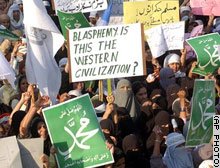
Muslim group sues over cartoons
Thursday, March 30, 2006 Posted: 0954 GMT (1754 HKT)
Protests took place around the world last month over cartoons depicting Prophet Mohammed.
COPENHAGEN, Denmark (AP) -- A group of 27 Danish Muslim organizations have filed a defamation lawsuit against the newspaper that first published the contentious Prophet Muhammed cartoons, their lawyer said Thursday.
The lawsuit was filed Wednesday, two weeks after Denmark's top prosecutor declined to press criminal charges, saying the drawings that sparked a firestorm in the Muslim world did not violate laws against racism or blasphemy.
Michael Christiani Havemann, a lawyer representing the Muslim groups, said lawsuit sought 100,000 kroner ($16,100) in damages from Jyllands-Posten Editor in Chief Carsten Juste and Culture Editor Flemming Rose, who supervised the cartoon project.
"We're seeking judgment for both the text and the drawings which were gratuitously defamatory and injurious," Havemann said.
The lawsuit was filed in the western city of Aarhus, where Jyllands-Posten is based.
The newspaper published the 12 cartoons on September 30 with an accompanying tests saying it was challenging a perceived self-censorship among artists afraid to offend Islam.
The newspaper apologized for offending Muslims after violent protests against Denmark erupted in the Middle East, but stood by its decision to print the drawings, citing the freedom of speech.
U of T Muslim association turns 40
Hart House gave first public prayer space for Muslims Naylor condemns isolated incidents of campus racism
Mar. 30, 2006. 01:00 AM
LOUISE BROWN
EDUCATION REPORTER
As the sun passed its high point over the University of Toronto, Muslim student Mobashsher Khan had to find somewhere to pray.
It was 1969, back when Toronto had no downtown mosque and only a few thousand Muslims, and this new PhD student from India had to figure out where he could perform the Friday midday prayer required of faithful Muslims.
To his surprise, he didn't have to go far.
The U of T's Hart House — then a male bastion of culture and Ivy League tradition — offered Toronto Muslims their first public prayer space, as the initial wave of Muslim newcomers began to arrive in the late 1960s.
In an unlikely third-floor Hart House sitting room at the top of a narrow set of stairs, Khan and about 15 Muslims came for years each Friday to pray.
That was then. What a difference almost 40 years make.
Last Friday, Khan — now a retired professor of plant science who made a career at the U of T — walked past those same Hart House stairs to the sweeping Debates Room where 700 Muslim students now pray every Friday.
"We were a small group back then, only about 15 to 20 of us came for prayers, including 10 workers from the nearby Ontario Hydro building and a few more from the government offices — but Hart House staff was always great," recalled the botanist, whose three children have all graduated from the U of T.
Those early days seem a world away from today, where the U of T Muslim Students' Association boasts more than 1,500 members and has several prayer spaces on campus, a Muslim student newspaper and a number of campus cafeterias with Halal items on the menu.
The growth of the campus Muslim community mirrors the growth of this city's Muslim community, where more than 400,000 Muslims from countries around the globe have established more than 50 mosques and form more than half of Canada's Muslim population.
"But now that I think of it, there was one small problem back then," Khan confides with a grin.
"The water we used for our ablutions started to leak through the floor of the prayer room. But even then, the people at Hart House were wonderful," Khan said.
"They set up a special sink and chair in the basement where we could wash exactly the way we should without any leaking — and it's still there."
Both Khan and Adeel Siddiqi, a lifelong friend he met at Friday prayers at Hart House, have donated to a new scholarship fund being created by the U of T Muslim Students' Association to celebrate its 40th anniversary. They say they want to give something back to the university they feel was such a pioneer in cultural diversity and religious accommodation.
"The U of T supported us in so many ways. When we came in each week for prayers, we used to have to cover up the photographs on the wall with cloth or newspapers to comply with our religious practice — and then take it all down when we were through," said Siddiqi, who came from Pakistan and is now a supervisor at the university's zoology teaching labs.
"One day we arrived to find that Hart House staff had custom-made special coverings for the pictures, that slipped on and off very easily.
"I have spent 38 years here at the U of T since I arrived in 1967 as a Master's student, and I have never felt unwelcome."
Lately that has not always been the case.
A Muslim student was shoved and harassed with racist insults recently at Hart House. Anti-Muslim flyers were dropped on-campus. Two female Muslim students were pelted with eggs on International Women's Day March 8. A student newspaper printed cartoons showing the Prophet Mohammed and Jesus Christ kissing.
President David Naylor condemned racism in a statement last week to the university's Governing Council and said the U of T "remains opposed to Islamophobia, anti-semitism, and every conceivable form of discrimination based on race, religion or faith, or ethnocultural identity."
While the university will uphold the right to free speech, Naylor said it will not condone racial discrimination anywhere on campus.
Muslim PhD student Safiyya Ally says she believes the recent incidents were isolated, but given global tensions, she said it is comforting for Muslim students to have an organization that feels like a spiritual home base.
"Sept. 11, 2001 was my very first day of classes at the U of T and it was devastating to sit in class watching the professor replay the tape over and over of the planes crashing into the towers and know that, like it or not, the people who did this are probably Muslim," said Ally, communications director for the Muslim Students' Association. "When people feel threatened, it's easy to close ranks and look for comfort among people who understand."
Ally said while some campus eateries adjust their hours to accommodate students who must fast during the Muslim festival of Ramadan, the student group is still lobbying for more Halal foods on campus — many students leave campus to eat Halal food at nearby Popeye's restaurant and the Kebab House.
The club also wants the engineering faculty, with its relatively high number of Muslim students, to block off an hour each Friday for prayers, something the school is considering.
But while the Muslim Students' Association offers a busy range of social and religious activities — from an upcoming "Sisters' Formal and Talent Night" to Muslim poetry readings and film screenings — there is a growing focus on outreach with the non-Muslim community.
"We're not segregationists. We're working with other groups in April to make sandwiches for homeless shelters," says second-year student Asim Ashraf. "We provide services to our community but we also care about the larger world."
Different groups working together reflects the spirit of a university, says astronomy student Mubdi Rahman, who has spearheaded the club's 40th anniversary and new scholarship fund.
"That's what makes a university great — you can walk across the street on campus and see people from seven different religious backgrounds.
"It's the nature of how we treat diversity; we allow ourselves to be comfortable being different."
Hart House gave first public prayer space for Muslims Naylor condemns isolated incidents of campus racism
Mar. 30, 2006. 01:00 AM
LOUISE BROWN
EDUCATION REPORTER
As the sun passed its high point over the University of Toronto, Muslim student Mobashsher Khan had to find somewhere to pray.
It was 1969, back when Toronto had no downtown mosque and only a few thousand Muslims, and this new PhD student from India had to figure out where he could perform the Friday midday prayer required of faithful Muslims.
To his surprise, he didn't have to go far.
The U of T's Hart House — then a male bastion of culture and Ivy League tradition — offered Toronto Muslims their first public prayer space, as the initial wave of Muslim newcomers began to arrive in the late 1960s.
In an unlikely third-floor Hart House sitting room at the top of a narrow set of stairs, Khan and about 15 Muslims came for years each Friday to pray.
That was then. What a difference almost 40 years make.
Last Friday, Khan — now a retired professor of plant science who made a career at the U of T — walked past those same Hart House stairs to the sweeping Debates Room where 700 Muslim students now pray every Friday.
"We were a small group back then, only about 15 to 20 of us came for prayers, including 10 workers from the nearby Ontario Hydro building and a few more from the government offices — but Hart House staff was always great," recalled the botanist, whose three children have all graduated from the U of T.
Those early days seem a world away from today, where the U of T Muslim Students' Association boasts more than 1,500 members and has several prayer spaces on campus, a Muslim student newspaper and a number of campus cafeterias with Halal items on the menu.
The growth of the campus Muslim community mirrors the growth of this city's Muslim community, where more than 400,000 Muslims from countries around the globe have established more than 50 mosques and form more than half of Canada's Muslim population.
"But now that I think of it, there was one small problem back then," Khan confides with a grin.
"The water we used for our ablutions started to leak through the floor of the prayer room. But even then, the people at Hart House were wonderful," Khan said.
"They set up a special sink and chair in the basement where we could wash exactly the way we should without any leaking — and it's still there."
Both Khan and Adeel Siddiqi, a lifelong friend he met at Friday prayers at Hart House, have donated to a new scholarship fund being created by the U of T Muslim Students' Association to celebrate its 40th anniversary. They say they want to give something back to the university they feel was such a pioneer in cultural diversity and religious accommodation.
"The U of T supported us in so many ways. When we came in each week for prayers, we used to have to cover up the photographs on the wall with cloth or newspapers to comply with our religious practice — and then take it all down when we were through," said Siddiqi, who came from Pakistan and is now a supervisor at the university's zoology teaching labs.
"One day we arrived to find that Hart House staff had custom-made special coverings for the pictures, that slipped on and off very easily.
"I have spent 38 years here at the U of T since I arrived in 1967 as a Master's student, and I have never felt unwelcome."
Lately that has not always been the case.
A Muslim student was shoved and harassed with racist insults recently at Hart House. Anti-Muslim flyers were dropped on-campus. Two female Muslim students were pelted with eggs on International Women's Day March 8. A student newspaper printed cartoons showing the Prophet Mohammed and Jesus Christ kissing.
President David Naylor condemned racism in a statement last week to the university's Governing Council and said the U of T "remains opposed to Islamophobia, anti-semitism, and every conceivable form of discrimination based on race, religion or faith, or ethnocultural identity."
While the university will uphold the right to free speech, Naylor said it will not condone racial discrimination anywhere on campus.
Muslim PhD student Safiyya Ally says she believes the recent incidents were isolated, but given global tensions, she said it is comforting for Muslim students to have an organization that feels like a spiritual home base.
"Sept. 11, 2001 was my very first day of classes at the U of T and it was devastating to sit in class watching the professor replay the tape over and over of the planes crashing into the towers and know that, like it or not, the people who did this are probably Muslim," said Ally, communications director for the Muslim Students' Association. "When people feel threatened, it's easy to close ranks and look for comfort among people who understand."
Ally said while some campus eateries adjust their hours to accommodate students who must fast during the Muslim festival of Ramadan, the student group is still lobbying for more Halal foods on campus — many students leave campus to eat Halal food at nearby Popeye's restaurant and the Kebab House.
The club also wants the engineering faculty, with its relatively high number of Muslim students, to block off an hour each Friday for prayers, something the school is considering.
But while the Muslim Students' Association offers a busy range of social and religious activities — from an upcoming "Sisters' Formal and Talent Night" to Muslim poetry readings and film screenings — there is a growing focus on outreach with the non-Muslim community.
"We're not segregationists. We're working with other groups in April to make sandwiches for homeless shelters," says second-year student Asim Ashraf. "We provide services to our community but we also care about the larger world."
Different groups working together reflects the spirit of a university, says astronomy student Mubdi Rahman, who has spearheaded the club's 40th anniversary and new scholarship fund.
"That's what makes a university great — you can walk across the street on campus and see people from seven different religious backgrounds.
"It's the nature of how we treat diversity; we allow ourselves to be comfortable being different."
Article published Mar 30, 2006
FBI: International scam targeting Islamic mosques broken
By GARRY MITCHELLAssociated Press Writer
An international wire fraud scheme targeting Islamic institutions with a phony stranded-traveler plea, netting only small sums but hitting multiple victims over many years, has been disrupted by the arrest of its mastermind, the FBI says.Islamic advocates say Mohammed Mustafa Agbareia, who was arrested in Canada and pleaded guilty March 1 in Alabama to one count of conspiracy to commit wire fraud, may have scammed more than $1 million from mosques and Islamic groups over nearly two decades.He will be sentenced July 10 by U.S. District Judge Charles Butler in Mobile, where he is in the custody of federal marshals.Agbareia is accused of claiming to be with a Saudi development bank investing in local Islamic society projects. Eventually he would contact Islamic leaders asking for money, saying he was stranded at an airport in Canada or another distant location and needed money wired.Agbareia manipulated the Islamic tenet of lending aid to a stranded traveler, the FBI says.He would always ask for $1,000 to $1,500 - amounts small enough to "pass under the radar" of local authorities, said Ibrahim Hooper, a spokesman for the Council on American-Islamic Relations (CAIR) in Washington, D.C."This guy was really unique," Hooper said in an interview Wednesday.Agbareia, whose guilty plea was first reported by the Mobile Register, faces a possible 5-year prison sentence, a $250,000 fine and 3 years of federal supervision after his prison release. But penalties could vary because a religious institution was a victim and the court's sentencing guidelines are only advisory in this case, according to the plea agreement.The scheme dates to the 1990s and had at least 45 victims in the United States before being halted. It involved over 10,000 solicitations for money, according to the FBI.Agbareia was indicted in Mobile and Vermont on the fraud charges about a year ago. A second man, Zouhair Youssei Hissy, also was indicted in Mobile for an alleged role in the scheme and awaits extradition to the United States from Canada.Agbareia, 40, was arrested in Canada pending his unrelated deportation to Israel. Records show he's from Nazareth in Israel.The FBI probe of Agbareia began in Vermont where two victims were defrauded, an FBI spokesman said in a March 22 statement about the case. Another complaint came in Alabama in 2004 from the Islamic Society of Mobile Mosque.Collecting victims' phone numbers on the Internet, Islamic institutions or mosques were contacted by Agbareia and Hissy, who claimed to represent the Saudi Arabia-based Islamic Development Bank (IDB).Agbareia usually kept 60-80 percent of the money, with Hissy getting the remainder, the FBI said.In Mobile, FBI spokesman Special Agent Craig Dahle said it's unknown how much money the scheme collected. He said there could be victims worldwide.In the plea agreement, Agbareia, represented by the public defender's office, agreed to forfeit any proceeds of his criminal activity and cooperate with the government's investigation under threat of additional charges.
FBI: International scam targeting Islamic mosques broken
By GARRY MITCHELLAssociated Press Writer
An international wire fraud scheme targeting Islamic institutions with a phony stranded-traveler plea, netting only small sums but hitting multiple victims over many years, has been disrupted by the arrest of its mastermind, the FBI says.Islamic advocates say Mohammed Mustafa Agbareia, who was arrested in Canada and pleaded guilty March 1 in Alabama to one count of conspiracy to commit wire fraud, may have scammed more than $1 million from mosques and Islamic groups over nearly two decades.He will be sentenced July 10 by U.S. District Judge Charles Butler in Mobile, where he is in the custody of federal marshals.Agbareia is accused of claiming to be with a Saudi development bank investing in local Islamic society projects. Eventually he would contact Islamic leaders asking for money, saying he was stranded at an airport in Canada or another distant location and needed money wired.Agbareia manipulated the Islamic tenet of lending aid to a stranded traveler, the FBI says.He would always ask for $1,000 to $1,500 - amounts small enough to "pass under the radar" of local authorities, said Ibrahim Hooper, a spokesman for the Council on American-Islamic Relations (CAIR) in Washington, D.C."This guy was really unique," Hooper said in an interview Wednesday.Agbareia, whose guilty plea was first reported by the Mobile Register, faces a possible 5-year prison sentence, a $250,000 fine and 3 years of federal supervision after his prison release. But penalties could vary because a religious institution was a victim and the court's sentencing guidelines are only advisory in this case, according to the plea agreement.The scheme dates to the 1990s and had at least 45 victims in the United States before being halted. It involved over 10,000 solicitations for money, according to the FBI.Agbareia was indicted in Mobile and Vermont on the fraud charges about a year ago. A second man, Zouhair Youssei Hissy, also was indicted in Mobile for an alleged role in the scheme and awaits extradition to the United States from Canada.Agbareia, 40, was arrested in Canada pending his unrelated deportation to Israel. Records show he's from Nazareth in Israel.The FBI probe of Agbareia began in Vermont where two victims were defrauded, an FBI spokesman said in a March 22 statement about the case. Another complaint came in Alabama in 2004 from the Islamic Society of Mobile Mosque.Collecting victims' phone numbers on the Internet, Islamic institutions or mosques were contacted by Agbareia and Hissy, who claimed to represent the Saudi Arabia-based Islamic Development Bank (IDB).Agbareia usually kept 60-80 percent of the money, with Hissy getting the remainder, the FBI said.In Mobile, FBI spokesman Special Agent Craig Dahle said it's unknown how much money the scheme collected. He said there could be victims worldwide.In the plea agreement, Agbareia, represented by the public defender's office, agreed to forfeit any proceeds of his criminal activity and cooperate with the government's investigation under threat of additional charges.
Poll: Islamic women liked as leaders
PRINCETON, N.J., March 30 (UPI) -- The majority of respondents in all but one of eight mostly Islamic countries surveyed in a Gallup Poll agree women should have leadership roles.
The majority range was wide, from 54 percent in Egypt to 92 percent in Lebanon. Only Saudi Arabia, with 40-percent approval, fell below the 50-percent mark.
Other countries included Turkey at 86 percent; Iran 78; Morocco 74; Pakistan 58; and Jordon 55. Overall, about nine out of 10 of those asked in Lebanon and Turkey agreed that women should be allowed in leadership positions.
Gallup World Poll surveys were conducted in eight countries between August and October last year asked respondents to agree or disagree on the supposition that "Women should be allowed to hold leadership positions in the Cabinet and national council."
© Copyright 2006 United Press International, Inc. All Rights Reserved
PRINCETON, N.J., March 30 (UPI) -- The majority of respondents in all but one of eight mostly Islamic countries surveyed in a Gallup Poll agree women should have leadership roles.
The majority range was wide, from 54 percent in Egypt to 92 percent in Lebanon. Only Saudi Arabia, with 40-percent approval, fell below the 50-percent mark.
Other countries included Turkey at 86 percent; Iran 78; Morocco 74; Pakistan 58; and Jordon 55. Overall, about nine out of 10 of those asked in Lebanon and Turkey agreed that women should be allowed in leadership positions.
Gallup World Poll surveys were conducted in eight countries between August and October last year asked respondents to agree or disagree on the supposition that "Women should be allowed to hold leadership positions in the Cabinet and national council."
© Copyright 2006 United Press International, Inc. All Rights Reserved
Muslims and non-Muslims can work harder to see the other side
Fighting Islamophobia should be a top priority
Date published: 3/30/2006
WASHINGTON--The recent hyste- ria surrounding the approval of a Dubai firm to manage parts of several American ports demonstrates how fear of Islam, or "Islamophobia," can overpower rational discourse and harm our nation's true interests.
What would normally have been a routine business deal with a stable ally turned into a political fiasco that sent a "no Arabs or Muslims need apply" message to our partners in the Middle East and beyond.
Indications of how politicians were able to exploit the Dubai ports deal appear in two new polls on attitudes toward Islam. These troubling poll results should serve as a wake-up call for all Americans who value our nation's tradition of religious tolerance and who seek to improve our sagging image in the Muslim world.
The polls, one by the Council on American-Islamic Relations and the other by The Washington Post and ABC News, indicate that almost half of Americans have a negative perception of Islam and that one in four of those surveyed consistently believe stereotypes such as: "Muslims value life less than other people" and "The Muslim religion teaches violence and hatred."
The Post-ABC poll found that one-fourth of Americans "admitted to harboring prejudice toward Muslims," which experts said is "fueled in part by political statements and media reports that focus almost solely on the actions of Muslim extremists."
CAIR's survey also showed that the majority of Americans have little or no knowledge about Islam.
A majority of the respondents in CAIR's survey said they would change their views about Islam and Muslims if they perceived that Muslims condemned terrorism more strongly, showed more concern for issues important to ordinary Americans, worked to improve the status of women, and worked to improve the image of America in the Muslim world.
The results of both polls suggest that education is the key to decreasing anti-Muslim prejudice and that Muslims must do a better job of letting fellow Americans know what is being done to address their concerns.
CAIR and other American Muslim groups have repeatedly condemned terrorism of any kind. The "Not in the Name of Islam" public service announcement campaign, a fatwa against terrorism, and an online petition drive rejecting violence in the name of Islam are but a few examples.
Efforts are under way to increase the participation of Muslim women in American mosques. CAIR helped distribute a brochure called "Women Friendly Mosques and Community Centers: Working Together to Reclaim Our Heritage" to mosques throughout the United States.
American Muslims also have worked to help build bridges of understanding between the United States and the Islamic world.
American Muslim leaders recently took part in diplomatic initiatives during recent controversies such as the rioting in suburbs of Paris and the worldwide reaction to publications of cartoons of the Prophet Muhammad. A CAIR initiative called "Explore the Life of Muhammad" offers free DVDs or books about Islam's prophet to Americans of all faiths.
In the past, educational and cultural exchanges were viewed as a kind of frill--a nice undertaking if the resources were available. Today, such efforts ought to be viewed as long-term investments vital to the national security interests of the United States.
Islamophobia, like anti-Semitism or other forms of bigotry, should be of concern to all Americans.
It was Islamophobia that prompted 44 percent of Americans surveyed in a 2004 Cornell University study to believe that some curtailment of American Muslim civil liberties might be necessary.
There is a silver lining to all this bad news. Those Americans who had a chance to meet or interact with Muslims often tended to have more enlightened attitudes.
Surveys repeatedly show that people who feel they do understand Islam are much more likely to view it positively.
Our nation's experiences since the Sept. 11 terror attacks, coupled with recent research, should spur American religious and political leaders to make fighting Islamophobia a top priority.
PARVEZ AHMED is board chairman of the Council on American-Islamic Relations.
Date published: 3/30/2006
Fighting Islamophobia should be a top priority
Date published: 3/30/2006
WASHINGTON--The recent hyste- ria surrounding the approval of a Dubai firm to manage parts of several American ports demonstrates how fear of Islam, or "Islamophobia," can overpower rational discourse and harm our nation's true interests.
What would normally have been a routine business deal with a stable ally turned into a political fiasco that sent a "no Arabs or Muslims need apply" message to our partners in the Middle East and beyond.
Indications of how politicians were able to exploit the Dubai ports deal appear in two new polls on attitudes toward Islam. These troubling poll results should serve as a wake-up call for all Americans who value our nation's tradition of religious tolerance and who seek to improve our sagging image in the Muslim world.
The polls, one by the Council on American-Islamic Relations and the other by The Washington Post and ABC News, indicate that almost half of Americans have a negative perception of Islam and that one in four of those surveyed consistently believe stereotypes such as: "Muslims value life less than other people" and "The Muslim religion teaches violence and hatred."
The Post-ABC poll found that one-fourth of Americans "admitted to harboring prejudice toward Muslims," which experts said is "fueled in part by political statements and media reports that focus almost solely on the actions of Muslim extremists."
CAIR's survey also showed that the majority of Americans have little or no knowledge about Islam.
A majority of the respondents in CAIR's survey said they would change their views about Islam and Muslims if they perceived that Muslims condemned terrorism more strongly, showed more concern for issues important to ordinary Americans, worked to improve the status of women, and worked to improve the image of America in the Muslim world.
The results of both polls suggest that education is the key to decreasing anti-Muslim prejudice and that Muslims must do a better job of letting fellow Americans know what is being done to address their concerns.
CAIR and other American Muslim groups have repeatedly condemned terrorism of any kind. The "Not in the Name of Islam" public service announcement campaign, a fatwa against terrorism, and an online petition drive rejecting violence in the name of Islam are but a few examples.
Efforts are under way to increase the participation of Muslim women in American mosques. CAIR helped distribute a brochure called "Women Friendly Mosques and Community Centers: Working Together to Reclaim Our Heritage" to mosques throughout the United States.
American Muslims also have worked to help build bridges of understanding between the United States and the Islamic world.
American Muslim leaders recently took part in diplomatic initiatives during recent controversies such as the rioting in suburbs of Paris and the worldwide reaction to publications of cartoons of the Prophet Muhammad. A CAIR initiative called "Explore the Life of Muhammad" offers free DVDs or books about Islam's prophet to Americans of all faiths.
In the past, educational and cultural exchanges were viewed as a kind of frill--a nice undertaking if the resources were available. Today, such efforts ought to be viewed as long-term investments vital to the national security interests of the United States.
Islamophobia, like anti-Semitism or other forms of bigotry, should be of concern to all Americans.
It was Islamophobia that prompted 44 percent of Americans surveyed in a 2004 Cornell University study to believe that some curtailment of American Muslim civil liberties might be necessary.
There is a silver lining to all this bad news. Those Americans who had a chance to meet or interact with Muslims often tended to have more enlightened attitudes.
Surveys repeatedly show that people who feel they do understand Islam are much more likely to view it positively.
Our nation's experiences since the Sept. 11 terror attacks, coupled with recent research, should spur American religious and political leaders to make fighting Islamophobia a top priority.
PARVEZ AHMED is board chairman of the Council on American-Islamic Relations.
Date published: 3/30/2006
Khan analyzes misconceptions of Islam
March 30th, 2006
Angela Kim, News Assistant
E-MAIL
"What would Muhammed do?" investiages second-largest religion in the world
Islam stands to be the second-most practiced religion globally, but how much does the inclusive environment at Virginia Tech really know about the Muslim culture? Within any religion, there are misconceptions, generalizations, and stereotypes, but the Muslim Student Association wants to set aside any misunderstandings during Islam Awareness Week.Shaykh Safi Khan, a professional speaker and student of Islam, spoke with students last night in his lecture titled, “What Would Muhammad Do?” to address topics concerning the reality of the Islam and the adverse stereotypes of terrorism, women's rights, oppression, and discrimination.Through historical accounts and stories of Muhammad's humbling actions, the audience grasped an understanding of Islam and its values. Khan shared with the audience the humbling actions and teachings of Muhammad in order to educate about Muhammad's dedication to morality and values of peace.“It was in prophet Muhammad's nature to be very caring and kind … Prophet Muhammad was a man who valued knowledge,” Khan said.Khan said that Muhammad altered the women's positions within Islam, giving women an identity in a society where women were treated as property. “Prophet Muhammad brought rights for the women to own property - 1,200 years before women in the west were given that right. Muslim women were voting in the time of Muhammad, 1,200 years before the women's suffrage act.”Khan said that Muhammad was tolerant of other religions and those prejudiced against Islam. In a world where Muslims were discriminated, Muhammad taught Muslims to be mindful of Allah's peaceful acclamations. “He said to use the troubles of the world and enrich the world hereafter,” he said.Khan addressed various topics affecting the Muslim community by taking on the leadership of Muhammad.“I think it's important for a professional speaker to come and be able to answer questions and clear misconceptions in the best manner. He can speak in the best manner more effective than we can as students,” said Nassiba Adjerid, graduate student in biological studies and secretary of MSA.Students attending the lecture believed the lecture provided insight into Islam and the life of Muhammad. Lily Tam, senior animal and poultry science major, said she felt Khan's lecture addressed the ideals of Muhammad and the values of Islam.“Khan described Muhammad as a knowledgeable man who was concerned with Islam values within society. I learned that he was concerned with women's rights, oppression of Muslims in society and the importance of Islam morality within different cultures,” Tam said.Nina Alanes, freshman accounting major, said, “Muhammad was a normal person, but the lecture showed me who he really was. Muhammad was not described as holy or perfect, but a man of good faith no matter what religion.” Adjerid said that MSA hopes to clear misconceptions through open dialogues among students and faculty within a general population in the community.“The goal for Islam Awareness Week is to increase awareness, not just about the religion but also about Muslims on campus who follow the religion,” Adjerid said.The MSA also hopes to battle the stereotypes presented in the media.“I think there has been great response on the campus community. There has been excitement on campus and from students,” Adjerid said. “The purpose is to enlighten students and have them engage more, ask questions and feel more comfortable with us on campus. Our point is to increase awareness.”Tam said she felt that Khan's lecture educated the audience and addressed the concerns within Islam. “I was unaware of the Islamic religion, and I'm glad that I attended Khan's lecture because I have expanded my knowledge of religious views, especially the Muslim culture,” Tam said.Mark McNamee, university provost, said “It's important we take time to step back from our daily lives, to learn about different cultures and religions … I think more people and the more time we do this, we can make progress for peace in this world. I'm especially proud that Virginia Tech is home to so many students and cultures who are willing to share their cultures and values.”
March 30th, 2006
Angela Kim, News Assistant
"What would Muhammed do?" investiages second-largest religion in the world
Islam stands to be the second-most practiced religion globally, but how much does the inclusive environment at Virginia Tech really know about the Muslim culture? Within any religion, there are misconceptions, generalizations, and stereotypes, but the Muslim Student Association wants to set aside any misunderstandings during Islam Awareness Week.Shaykh Safi Khan, a professional speaker and student of Islam, spoke with students last night in his lecture titled, “What Would Muhammad Do?” to address topics concerning the reality of the Islam and the adverse stereotypes of terrorism, women's rights, oppression, and discrimination.Through historical accounts and stories of Muhammad's humbling actions, the audience grasped an understanding of Islam and its values. Khan shared with the audience the humbling actions and teachings of Muhammad in order to educate about Muhammad's dedication to morality and values of peace.“It was in prophet Muhammad's nature to be very caring and kind … Prophet Muhammad was a man who valued knowledge,” Khan said.Khan said that Muhammad altered the women's positions within Islam, giving women an identity in a society where women were treated as property. “Prophet Muhammad brought rights for the women to own property - 1,200 years before women in the west were given that right. Muslim women were voting in the time of Muhammad, 1,200 years before the women's suffrage act.”Khan said that Muhammad was tolerant of other religions and those prejudiced against Islam. In a world where Muslims were discriminated, Muhammad taught Muslims to be mindful of Allah's peaceful acclamations. “He said to use the troubles of the world and enrich the world hereafter,” he said.Khan addressed various topics affecting the Muslim community by taking on the leadership of Muhammad.“I think it's important for a professional speaker to come and be able to answer questions and clear misconceptions in the best manner. He can speak in the best manner more effective than we can as students,” said Nassiba Adjerid, graduate student in biological studies and secretary of MSA.Students attending the lecture believed the lecture provided insight into Islam and the life of Muhammad. Lily Tam, senior animal and poultry science major, said she felt Khan's lecture addressed the ideals of Muhammad and the values of Islam.“Khan described Muhammad as a knowledgeable man who was concerned with Islam values within society. I learned that he was concerned with women's rights, oppression of Muslims in society and the importance of Islam morality within different cultures,” Tam said.Nina Alanes, freshman accounting major, said, “Muhammad was a normal person, but the lecture showed me who he really was. Muhammad was not described as holy or perfect, but a man of good faith no matter what religion.” Adjerid said that MSA hopes to clear misconceptions through open dialogues among students and faculty within a general population in the community.“The goal for Islam Awareness Week is to increase awareness, not just about the religion but also about Muslims on campus who follow the religion,” Adjerid said.The MSA also hopes to battle the stereotypes presented in the media.“I think there has been great response on the campus community. There has been excitement on campus and from students,” Adjerid said. “The purpose is to enlighten students and have them engage more, ask questions and feel more comfortable with us on campus. Our point is to increase awareness.”Tam said she felt that Khan's lecture educated the audience and addressed the concerns within Islam. “I was unaware of the Islamic religion, and I'm glad that I attended Khan's lecture because I have expanded my knowledge of religious views, especially the Muslim culture,” Tam said.Mark McNamee, university provost, said “It's important we take time to step back from our daily lives, to learn about different cultures and religions … I think more people and the more time we do this, we can make progress for peace in this world. I'm especially proud that Virginia Tech is home to so many students and cultures who are willing to share their cultures and values.”
Wednesday, March 29, 2006
Absorbing Europe's Muslims
By H.D.S. Greenway March 28, 2006
DURING A discussion about Muslims in Europe at the American Academy in Berlin, where I had the opportunity to spend a few weeks this winter, a young man rose to ask a disturbing question.
''In Germany we have the most liberal constitution . . . and freedom of religion," he said. ''There is perhaps more freedom than is available in any other country of the world. But on the other hand there is a paradox which I have experienced personally as a German of Pakistani descent." For even though he had been born in Germany, spoke fluent German, and had even served in the German Army, he found Germany ''one of the most psychologically hostile countries towards Muslims."
''This is not concerning the state and the government, but concerning the hearts and minds of the German people," he said. ''There is an extremely negative attitude -- a hostile attitude towards Muslims. What can be done to overcome that and to achieve a certain kind of peaceful coexistence?"
Germany is not alone in having difficulties absorbing immigrants, especially Muslims, who make up the fastest-growing minority in Europe. Originally recruited as ''guest workers" who were supposed to go home eventually, these mostly Muslim immigrants stayed on, sent for their families, and now are in their second and third generations. And more are coming every day.
Europe simply cannot get used to the fact that it has become an immigrant target. From about 1800 to 1920, Europe exported some 85 million people to the New World. Now this trend has reversed itself, and Europe has become a net importer. Immigrants from Africa and Asia are pouring in to find the same difficulties that dark-skinned immigrants have found elsewhere in Europe, North America, and Australia.
This is not unique to Germany, but Germany did refuse to admit that it had become a country of immigrants longer than most of its neighbors. Germany said citizenship comes through German blood, not the fact that you were born in Germany. Thus a descendant of Germans from Kazakhstan, whose family may have lived in Russia since Catherine the Great, gets a warmer welcome in Germany than descendants of Turks, Moroccans, or Pakistanis, even though the latter may have been born in Germany.
This changed in 1999 when laws were passed to free up citizenship to those not of German blood. But the laws can be changed faster than minds.
The gulf between Muslims and non-Muslim Europeans is growing, especially after 9/11, the Madrid and London bombings, and the murder of Dutch filmmaker Theo van Gogh at the hands of a Dutch-speaking Moroccan who thought van Gogh had insulted Muslims. The flap over the Danish cartoons has exacerbated this hostility, even though European Muslims did not join their co-religionists elsewhere in rioting.
Later, after the discussion at the academy, I turned on the TV news from the BBC. Two of the news presenters were South Asian women. Thinking of the young man's question, I recalled a conversation with Turkish-German politician Cem Ozdemir, now a member of the European Parliament, who had said how impressed he was with the number of dark faces he saw on British television compared with German television. And while Britain and France had plenty of immigrants playing on their national soccer teams, Germany, which will play host to the World Cup this summer, has no Germans of Turkish origin on the Germany national team -- even though Germans of Turkish origin make up the largest immigrant group in Germany. A German Turk might happily play for Berlin, for example, but when it comes to the national team he plays for Turkey. ''The best players for Turkey are from Germany," Ozdemir said.
France, too, is beginning to recognize that simply having more immigrant faces in the public eye can make a huge difference in changing anti-immigrant attitudes. Azouz Begag, a novelist and native of Lyon of Algerian descent, who now serves as minister for equal opportunity in the French government, told me how, after the November riots that shook France, public and private televisions companies were brought together to discuss how French TV might show more immigrant faces. He said that French President Jacques Chirac wanted ''to see more diversity on the screen." He conceded that the British had been more successful in this endeavor than the French.
Certainly seeing black and Hispanic faces on television has helped to break down prejudices in the United States -- a small step, perhaps, but one that can have surprisingly beneficial results.
H.D.S. Greenway's column appears regularly in the Globe.
© Copyright 2006 Globe Newspaper Company.
By H.D.S. Greenway March 28, 2006
DURING A discussion about Muslims in Europe at the American Academy in Berlin, where I had the opportunity to spend a few weeks this winter, a young man rose to ask a disturbing question.
''In Germany we have the most liberal constitution . . . and freedom of religion," he said. ''There is perhaps more freedom than is available in any other country of the world. But on the other hand there is a paradox which I have experienced personally as a German of Pakistani descent." For even though he had been born in Germany, spoke fluent German, and had even served in the German Army, he found Germany ''one of the most psychologically hostile countries towards Muslims."
''This is not concerning the state and the government, but concerning the hearts and minds of the German people," he said. ''There is an extremely negative attitude -- a hostile attitude towards Muslims. What can be done to overcome that and to achieve a certain kind of peaceful coexistence?"
Germany is not alone in having difficulties absorbing immigrants, especially Muslims, who make up the fastest-growing minority in Europe. Originally recruited as ''guest workers" who were supposed to go home eventually, these mostly Muslim immigrants stayed on, sent for their families, and now are in their second and third generations. And more are coming every day.
Europe simply cannot get used to the fact that it has become an immigrant target. From about 1800 to 1920, Europe exported some 85 million people to the New World. Now this trend has reversed itself, and Europe has become a net importer. Immigrants from Africa and Asia are pouring in to find the same difficulties that dark-skinned immigrants have found elsewhere in Europe, North America, and Australia.
This is not unique to Germany, but Germany did refuse to admit that it had become a country of immigrants longer than most of its neighbors. Germany said citizenship comes through German blood, not the fact that you were born in Germany. Thus a descendant of Germans from Kazakhstan, whose family may have lived in Russia since Catherine the Great, gets a warmer welcome in Germany than descendants of Turks, Moroccans, or Pakistanis, even though the latter may have been born in Germany.
This changed in 1999 when laws were passed to free up citizenship to those not of German blood. But the laws can be changed faster than minds.
The gulf between Muslims and non-Muslim Europeans is growing, especially after 9/11, the Madrid and London bombings, and the murder of Dutch filmmaker Theo van Gogh at the hands of a Dutch-speaking Moroccan who thought van Gogh had insulted Muslims. The flap over the Danish cartoons has exacerbated this hostility, even though European Muslims did not join their co-religionists elsewhere in rioting.
Later, after the discussion at the academy, I turned on the TV news from the BBC. Two of the news presenters were South Asian women. Thinking of the young man's question, I recalled a conversation with Turkish-German politician Cem Ozdemir, now a member of the European Parliament, who had said how impressed he was with the number of dark faces he saw on British television compared with German television. And while Britain and France had plenty of immigrants playing on their national soccer teams, Germany, which will play host to the World Cup this summer, has no Germans of Turkish origin on the Germany national team -- even though Germans of Turkish origin make up the largest immigrant group in Germany. A German Turk might happily play for Berlin, for example, but when it comes to the national team he plays for Turkey. ''The best players for Turkey are from Germany," Ozdemir said.
France, too, is beginning to recognize that simply having more immigrant faces in the public eye can make a huge difference in changing anti-immigrant attitudes. Azouz Begag, a novelist and native of Lyon of Algerian descent, who now serves as minister for equal opportunity in the French government, told me how, after the November riots that shook France, public and private televisions companies were brought together to discuss how French TV might show more immigrant faces. He said that French President Jacques Chirac wanted ''to see more diversity on the screen." He conceded that the British had been more successful in this endeavor than the French.
Certainly seeing black and Hispanic faces on television has helped to break down prejudices in the United States -- a small step, perhaps, but one that can have surprisingly beneficial results.
H.D.S. Greenway's column appears regularly in the Globe.
© Copyright 2006 Globe Newspaper Company.
Muslim woman claims oppression in court
By Scott E. WilliamsThe Daily News
Published March 27, 2006GALVESTON — A woman in court March 15 for a child support hearing said she wound up battling religious oppression from the presiding judge and a court bailiff.Karwana Boyd said she was wearing a hajib, a headscarf worn as a sign of humility by Muslim women.“It’s not a fashion statement,” she said.Boyd was at the Sam Popovich annex, waiting for child support Judge Doretha Henderson, when bailiff Clint Wayne Brown asked her to remove her head covering.Brown told The Daily News the woman was not wearing a hajib, but a tight headscarf.Brown asked her to remove the covering, and when she refused, he waited for the judge to arrive.Judge Henderson, a traveling judge who presides over child support courts in six counties, said Boyd was one of two women in court that day claiming Muslim religious reasons for their headwear.“I know what a hajib is,” Henderson said, “and this was not a hajib. She said she was Muslim, but was not wearing a traditional Muslim headscarf.”Henderson and Brown both also denied Boyd’s claim that the woman was threatened with jail over her refusal to remove the headwear.Boyd said, “He said if I didn’t take it off, I was risking going to jail for violating the courtroom’s rules.”Boyd ultimately addressed the judge directly, and Henderson said she instructed Boyd to wait in the hall until her case was ready.“That was the extent of our conversation,” Henderson said.Boyd said she was filing a complaint with the civil rights division of the state attorney general’s office.“I see this as nothing short of discrimination,” she said. Henderson said she would never infringe on someone’s civil liberties, religious or otherwise.“That’s what I’m here for,” the judge said, “to protect the rights of the people who appear before me.”
By Scott E. WilliamsThe Daily News
Published March 27, 2006GALVESTON — A woman in court March 15 for a child support hearing said she wound up battling religious oppression from the presiding judge and a court bailiff.Karwana Boyd said she was wearing a hajib, a headscarf worn as a sign of humility by Muslim women.“It’s not a fashion statement,” she said.Boyd was at the Sam Popovich annex, waiting for child support Judge Doretha Henderson, when bailiff Clint Wayne Brown asked her to remove her head covering.Brown told The Daily News the woman was not wearing a hajib, but a tight headscarf.Brown asked her to remove the covering, and when she refused, he waited for the judge to arrive.Judge Henderson, a traveling judge who presides over child support courts in six counties, said Boyd was one of two women in court that day claiming Muslim religious reasons for their headwear.“I know what a hajib is,” Henderson said, “and this was not a hajib. She said she was Muslim, but was not wearing a traditional Muslim headscarf.”Henderson and Brown both also denied Boyd’s claim that the woman was threatened with jail over her refusal to remove the headwear.Boyd said, “He said if I didn’t take it off, I was risking going to jail for violating the courtroom’s rules.”Boyd ultimately addressed the judge directly, and Henderson said she instructed Boyd to wait in the hall until her case was ready.“That was the extent of our conversation,” Henderson said.Boyd said she was filing a complaint with the civil rights division of the state attorney general’s office.“I see this as nothing short of discrimination,” she said. Henderson said she would never infringe on someone’s civil liberties, religious or otherwise.“That’s what I’m here for,” the judge said, “to protect the rights of the people who appear before me.”
Muslim students kick off Islam Awareness Week
Annual event aims to provide forum, dispel misperceptions
by Tara Brite
published on Tuesday, March 28, 2006
-Deanna Dent / THE STATE PRESS
Deedra Abboud speaks to students and faculty about misunderstandings of Islam in the Memorial Union Monday afternoon.
The Muslim Student Association kicked off its annual Islam Awareness Week Monday with a lecture in the Memorial Union aimed at dispelling Muslim stereotypes.More than 20 students attended the lecture that featured Deedra Abboud, executive director of Arizona's chapter of the Muslim American Society. Abboud asked students to list stereotypes they had heard about Muslims.The MSA is sponsoring a week of activities, including a lecture in the MU each night, a falafel-and-gyro sale on Hayden Lawn today and a tour of the Islamic Community Center on Sixth Street and Forest Avenue Thursday. Hazim Nasaredden, an MSA member and biochemistry senior, said Islam Awareness Week not only unites the community's Muslims, but also gets more people interested in learning about the religion. "It provides a forum for students to learn about things they don't know," Nasaredden said. The most common misconception about Muslims is that they, and all Arabs, are terrorists, Abboud said. There are more than 2 billion Muslims in the world, she said. "If all Muslims were terrorists, and they all killed one person, there would be 2 billion people wiped off the earth immediately," she added. "So this can't be true."Many people believe Muslims worship a different God than the Christian God and that they don't believe in Jesus or the other prophets, Abboud said. "We have the belief in one God," she said. "Allah means God."Another misconception is that all Muslim women are oppressed, Abboud said. Islamic women were given the rights to vote, get a divorce, work and get an education 1,400 years ago, she said. "But women took these rights for granted," she added. "Women tend to get busy, so their rights were slowly taken away and they didn't notice."People generally think these women are oppressed because they wear scarves, Abboud said. But the majority of women who wear scarves choose to wear them to remain modest and express their identities, she said. "Anywhere I go I'm seen as a Muslim," she added. "Or a nun, but I'm OK with that because I get treated with respect."Abboud said a person is Muslim once he or she takes a declaration of faith. This declaration requires a person to pray five times a day, fast for 30 days each year, make a pilgrimage to Mecca -- the most holy city in Islam -- and provide 2.5 percent of his or her net earnings to the community when it is affordable, she said. Molecular biology sophomore Moe Abdalla said the lecture was informative, and it changed his perspective of why Muslim women wear scarves."It was the opposite of what I thought," he said. "It was very educational."English literature major Diana Coleman said she attended the lecture because she is earning her Islamic studies certificate. The discussion with Abboud was very informative, she said. "It gave a chance for people to confront their beliefs and get feedback to rethink what they believed," she added. Reach the reporter at tara.brite@asu.edu.
Apostasy in the Muslim world
Posted by Mollie
An Afghan court dismissed the case against a man facing possible execution for converting from Islam to Christianity, according to various reports. His release date has not been announced but could be very soon.
It is worth noting that Abdul Rahman’s case was not dismissed because of any sudden stated change of heart on whether the penalty for apostasy is death — at least among those who were in a place or position to do him in. It was dismissed on a technicality. An Afghan Supreme Court spokesman said there were problems with the prosecutor’s evidence. With some of Rahman’s next of kin testifying that he was mentally ill, he was deemed unfit for trial.
We began the conversation about media coverage of Rahman’s fate last week. One issue I highlighted was the need for reporters to understand that Rahman was facing death not for being a Christian but for being a Christian who once had been Muslim. In that previous discussion, Muslim reader Maryam, a.k.a. Umm (mother to) Yasmin, commented:
Actually (and I have memories of pointing this out before here) “sharia, or Islamic law” does not stipulate death for apostasy, and it would be nice if GR journos could take their peers to task for mindlessly repeating this mistake. Various scholars, jurists and thinkers (medieval and modern alike) vigourously disagree on the topic.
Radio Free Europe — which is funded by the United States government — made Maryam’s point. In an article about Rahman, it compared penalties for converting from Islam to penalties for committing treason against the United States:
The key issue for Muslim thinkers grappling with Islamic law and modernity revolves not around whether apostasy is a heinous crime, but how to deal with it. Islam Online, a Qatar-based site that attempts to explain Islamic issues, quoted the well-known Islamic scholar Sheikh Yusuf al-Qaradawi as acknowledging that there is a difference of opinion on the issue even if most support the death penalty.
“All Muslim jurists agree that the apostate is to be punished,” al-Qaradawi said. “However, they differ regarding the punishment itself. The majority of them go for killing; meaning that an apostate is to be sentenced to death.”
The Christian Science Monitor’s Rachel Morarjee and Dan Murphy provided more context. They highlight religious tension between Muslims and Christians in Egypt and Pakistan, the killing of Muslims who convert to Christianity by their own family members, attacks against Christian churches for alleged sympathy for America, etc. They point out that Afghanistan is 99 percent Muslim and that the 10,000 Christians who practice there do so in secret:
The issue of religious freedoms is one in which, as in Afghanistan, modern laws are clashing with ancient traditions. Rahman’s case illustrates a glaring contradiction between Afghanistan’s constitution, which upholds the right to freedom of religion on one hand but enshrines the supremacy of sharia law on the other.
Most mainstream schools of Islamic jurisprudence call for converts to be executed. Though the Koran promises only hellfire for apostates and also says “there should be no compunction in religion,” Islamic jurists have typically argued that execution is mandated, citing stories of comments made by the prophet Muhammad.
“The prophet Muhammad said that anyone who rejects Islam for another religion should be executed,” said Mr. Mawlavezada, the judge.
Though some liberal Islamic scholars disagree, pointing out that no such rule exists in the Koran, they have been largely silenced in Afghanistan. Last year, Afghan writer Ali Mohaqeq Nasab spent almost three months in jail last autumn for an article questioning the traditional call for execution.
So Rahman’s case has been dropped. But with so many Muslims viewing conversion from Islam to be a crime punishable by death, his future might be interesting. The issue of how Muslims deal with apostasy is not going away. Let’s hope reporters don’t forget the larger story.
Posted at 12:41 AM
Posted by Mollie
An Afghan court dismissed the case against a man facing possible execution for converting from Islam to Christianity, according to various reports. His release date has not been announced but could be very soon.
It is worth noting that Abdul Rahman’s case was not dismissed because of any sudden stated change of heart on whether the penalty for apostasy is death — at least among those who were in a place or position to do him in. It was dismissed on a technicality. An Afghan Supreme Court spokesman said there were problems with the prosecutor’s evidence. With some of Rahman’s next of kin testifying that he was mentally ill, he was deemed unfit for trial.
We began the conversation about media coverage of Rahman’s fate last week. One issue I highlighted was the need for reporters to understand that Rahman was facing death not for being a Christian but for being a Christian who once had been Muslim. In that previous discussion, Muslim reader Maryam, a.k.a. Umm (mother to) Yasmin, commented:
Actually (and I have memories of pointing this out before here) “sharia, or Islamic law” does not stipulate death for apostasy, and it would be nice if GR journos could take their peers to task for mindlessly repeating this mistake. Various scholars, jurists and thinkers (medieval and modern alike) vigourously disagree on the topic.
Radio Free Europe — which is funded by the United States government — made Maryam’s point. In an article about Rahman, it compared penalties for converting from Islam to penalties for committing treason against the United States:
The key issue for Muslim thinkers grappling with Islamic law and modernity revolves not around whether apostasy is a heinous crime, but how to deal with it. Islam Online, a Qatar-based site that attempts to explain Islamic issues, quoted the well-known Islamic scholar Sheikh Yusuf al-Qaradawi as acknowledging that there is a difference of opinion on the issue even if most support the death penalty.
“All Muslim jurists agree that the apostate is to be punished,” al-Qaradawi said. “However, they differ regarding the punishment itself. The majority of them go for killing; meaning that an apostate is to be sentenced to death.”
The Christian Science Monitor’s Rachel Morarjee and Dan Murphy provided more context. They highlight religious tension between Muslims and Christians in Egypt and Pakistan, the killing of Muslims who convert to Christianity by their own family members, attacks against Christian churches for alleged sympathy for America, etc. They point out that Afghanistan is 99 percent Muslim and that the 10,000 Christians who practice there do so in secret:
The issue of religious freedoms is one in which, as in Afghanistan, modern laws are clashing with ancient traditions. Rahman’s case illustrates a glaring contradiction between Afghanistan’s constitution, which upholds the right to freedom of religion on one hand but enshrines the supremacy of sharia law on the other.
Most mainstream schools of Islamic jurisprudence call for converts to be executed. Though the Koran promises only hellfire for apostates and also says “there should be no compunction in religion,” Islamic jurists have typically argued that execution is mandated, citing stories of comments made by the prophet Muhammad.
“The prophet Muhammad said that anyone who rejects Islam for another religion should be executed,” said Mr. Mawlavezada, the judge.
Though some liberal Islamic scholars disagree, pointing out that no such rule exists in the Koran, they have been largely silenced in Afghanistan. Last year, Afghan writer Ali Mohaqeq Nasab spent almost three months in jail last autumn for an article questioning the traditional call for execution.
So Rahman’s case has been dropped. But with so many Muslims viewing conversion from Islam to be a crime punishable by death, his future might be interesting. The issue of how Muslims deal with apostasy is not going away. Let’s hope reporters don’t forget the larger story.
Posted at 12:41 AM
Article published Monday, March 27, 2006
What constitutes Muslim dress?
Recently a dubious case for religious freedom made news in Great Britain. It involved a Muslim schoolgirl who had sued her school for not allowing her to wear the body-length dress called jilbab. The case ended up in the House of Lords, and the judiciary committee of the House, equivalent to the U.S. Supreme Court, upheld the school's dress policy.
Three cheers for the Lords for their bold decision.
At the heart of the controversy, which, on occasion reaches the outer limits of absurdity, is the oft-asked question: What constitutes Muslim dress? Is it a one-design-fit-all solution as some contend, or is there some flexibility in the matter?
There are two pertinent references in the Qur'an on the subject (24:31 and 33:59) that ask Muslim women to cover themselves when they are outside the home. Both of these verses have the underlying theme that women (and that should also be applicable to Muslim men) should dress modestly and should not draw attention of strangers as walking sex symbols. Interpretations abound.
To some it means total shrouding of women, from head to toes, in an all-covering tent-like garment called a burqa. This was strictly enforced by the Taliban in Afghanistan and is still practiced in some parts of the Muslim world. To others, like the schoolgirl, Shabina Begum, it means the long robe that covers the body but not the face. To still others it means covering the hair with a scarf. To a great majority of Muslim women, however, it is the modesty in dress that is important whether it is a western dress, African dress, or a dress worn on the Indian subcontinent. The only criterion is that the dress should be non-provocative.
Shabina Begum was a student at the public school in Luton, England, where Muslim students are a 4 to 1 majority. In deference to the religious sensitivities of the majority the school, in consultation with parents and area imams, had allowed girl students to wear shalwar-kamees dress, which constitutes baggy pants, a knee length tunic, and a scarf. The dress is worn by tens of millions of Muslim women around the world, particularly in India and Pakistan and also in Bangladesh. She wore the dress until she reached the age of 17 when she insisted on wearing the jilbab. When she came to school wearing a jilbab she was sent home.
She sued the school and won the first round in a lower court where she was represented by Cherie Booth, the wife of British Prime Minister Tony Blair and an ardent supporter of dubious cultural causes. The school appealed to the House of Lords and the Lords in their wisdom struck down the lower court's verdict.
In an interview after the verdict, Shabina Begum was defiant and strident. She said that shalwar-kamees is the dress of disbelieving women and that for a real Muslim woman the only option is to wear jilbab. She may be forgiven for the self-righteous exuberance of her youth, but in one stroke she has insulted tens of millions of pious and believing Muslim women who wear the time-honored, elegant, and very practical shalwar-kamees.
Most religious revival movements end up trampling over the cultural traditions of non-Arab Muslims in order to reach the pristine and pure source of the faith. In many non-Arab Muslim countries the process of Islamization is in many ways the process of Arabization. What the prophet and his companions wore in the 7th century has become the only acceptable model. Islam has been practiced by non-Arabs (who incidentally outnumber Arabs 4 to 1) for the past 1,400 years in their own cultural milieu. So for a Pakistani schoolgirl to pejoratively dismiss everything but an Arab dress is the height of arrogance and ignorance.
Such pseudo-religious issues add credence to the widely held notion that Muslims on the whole are averse to change and that many of them still cling to the traditions that are archaic and out of step with the world around them.
A civil society has the obligation to be sensitive to the religious practices of its minorities. But a line has to be drawn where the overall good of the society outweighs the whims of certain individuals. In deciding the school dress issue in Great Britain the House of Lords has sent a clear message.
Dr. S. Amjad Hussain is a Toledo surgeon whose column appears every other week in The Blade.
» E-mail him at aghaji@buckeye-express.com
» Read more Dr. Hussain columns at www.toledoblade.com/hussain
What constitutes Muslim dress?
Recently a dubious case for religious freedom made news in Great Britain. It involved a Muslim schoolgirl who had sued her school for not allowing her to wear the body-length dress called jilbab. The case ended up in the House of Lords, and the judiciary committee of the House, equivalent to the U.S. Supreme Court, upheld the school's dress policy.
Three cheers for the Lords for their bold decision.
At the heart of the controversy, which, on occasion reaches the outer limits of absurdity, is the oft-asked question: What constitutes Muslim dress? Is it a one-design-fit-all solution as some contend, or is there some flexibility in the matter?
There are two pertinent references in the Qur'an on the subject (24:31 and 33:59) that ask Muslim women to cover themselves when they are outside the home. Both of these verses have the underlying theme that women (and that should also be applicable to Muslim men) should dress modestly and should not draw attention of strangers as walking sex symbols. Interpretations abound.
To some it means total shrouding of women, from head to toes, in an all-covering tent-like garment called a burqa. This was strictly enforced by the Taliban in Afghanistan and is still practiced in some parts of the Muslim world. To others, like the schoolgirl, Shabina Begum, it means the long robe that covers the body but not the face. To still others it means covering the hair with a scarf. To a great majority of Muslim women, however, it is the modesty in dress that is important whether it is a western dress, African dress, or a dress worn on the Indian subcontinent. The only criterion is that the dress should be non-provocative.
Shabina Begum was a student at the public school in Luton, England, where Muslim students are a 4 to 1 majority. In deference to the religious sensitivities of the majority the school, in consultation with parents and area imams, had allowed girl students to wear shalwar-kamees dress, which constitutes baggy pants, a knee length tunic, and a scarf. The dress is worn by tens of millions of Muslim women around the world, particularly in India and Pakistan and also in Bangladesh. She wore the dress until she reached the age of 17 when she insisted on wearing the jilbab. When she came to school wearing a jilbab she was sent home.
She sued the school and won the first round in a lower court where she was represented by Cherie Booth, the wife of British Prime Minister Tony Blair and an ardent supporter of dubious cultural causes. The school appealed to the House of Lords and the Lords in their wisdom struck down the lower court's verdict.
In an interview after the verdict, Shabina Begum was defiant and strident. She said that shalwar-kamees is the dress of disbelieving women and that for a real Muslim woman the only option is to wear jilbab. She may be forgiven for the self-righteous exuberance of her youth, but in one stroke she has insulted tens of millions of pious and believing Muslim women who wear the time-honored, elegant, and very practical shalwar-kamees.
Most religious revival movements end up trampling over the cultural traditions of non-Arab Muslims in order to reach the pristine and pure source of the faith. In many non-Arab Muslim countries the process of Islamization is in many ways the process of Arabization. What the prophet and his companions wore in the 7th century has become the only acceptable model. Islam has been practiced by non-Arabs (who incidentally outnumber Arabs 4 to 1) for the past 1,400 years in their own cultural milieu. So for a Pakistani schoolgirl to pejoratively dismiss everything but an Arab dress is the height of arrogance and ignorance.
Such pseudo-religious issues add credence to the widely held notion that Muslims on the whole are averse to change and that many of them still cling to the traditions that are archaic and out of step with the world around them.
A civil society has the obligation to be sensitive to the religious practices of its minorities. But a line has to be drawn where the overall good of the society outweighs the whims of certain individuals. In deciding the school dress issue in Great Britain the House of Lords has sent a clear message.
Dr. S. Amjad Hussain is a Toledo surgeon whose column appears every other week in The Blade.
» E-mail him at aghaji@buckeye-express.com
» Read more Dr. Hussain columns at www.toledoblade.com/hussain

Muslims flock to see 'miracle' fish
Mar 27 2006
Liverpool Echo
HUNDREDS of Muslims are descending on a Liverpool house to witness what many are calling a miracle.
Two fish are causing huge excitement among the faithful, who say they are each inscribed with holy names.
Worshippers are convinced two Oscar fish bear the names of Allah and Mohammed in their scales.
Long queues have been building up outside the terraced house in Mulgrave Street, Toxteth, where the fish are being kept.
Leaders at the nearby Al-Rahma mosque in Hatherley Street, are in no doubt about the authenticity.
Sheikh Sadek Kassem, the mosque's Imam, said: "This is a proof and a sign not just to Liverpool's Muslims, but for everyone."
The fish were bought last week from a pet store in Speke by Ali AlWaqedi, 23.
He spotted a squiggle on the side of one fish that mirrored the Arabic word for God - Allah.
Then he noticed another fish, in a different tank, that seemed to bear the Arabic spelling of Mohammed, known by Muslims as Islam's last Messenger.
Ali said: "This is a message from Allah to me, a reminder, and now my faith is stronger. Everyone is so excited by the discovery."
Andrew Chambers, a religious education teacher at Shorefields comprehensive school, said: "It's clear that the markings match the Arabic script."
The Merseyside marvel is a carbon copy of a discovery made earlier this year in Bury.
Locals flocked to village pet shop Water Aquatic after it was noticed that the markings on the scales of the two-year-old albino Oscar fish mimicked the Arabic script for Allah.
TCV News
Muslims Calling for Death of Rahman
March 27, 2006 03:08 PM EST
By Sher Zieve – Islamic clerics and Muslims have called for the death of Abdur Rahman, the Christian convert from Islam who was on trial for his religious conversion. The Afghan judicial system said that it will soon release Rahman from custody.
However, Muslims who have been incited by Islamic clerics, including the leading Afghan cleric Abdul Raoulf, have told their followers to execute Rahman as soon as he is released.Rahman’s defense attorneys are said to be seeking asylum in another country for their client.
Muslims Calling for Death of Rahman
March 27, 2006 03:08 PM EST
By Sher Zieve – Islamic clerics and Muslims have called for the death of Abdur Rahman, the Christian convert from Islam who was on trial for his religious conversion. The Afghan judicial system said that it will soon release Rahman from custody.
However, Muslims who have been incited by Islamic clerics, including the leading Afghan cleric Abdul Raoulf, have told their followers to execute Rahman as soon as he is released.Rahman’s defense attorneys are said to be seeking asylum in another country for their client.
Afghan Muslims protest at freeing of Christian convert
-27/03/06 Around a thousand Muslims in northern Afghanistan have protested publicly against a decision to dismiss the death penalty case against a man who converted to Christianity 16 years ago in another country. . Abdul Rahman's case has been handed back to the country’s attorney-general because of gaps in the evidence, an official said. The judge also raised questions as to whether he was mentally fit to stand trial – based on pleas from his family.President Hamid Karzai had personally intervened in the case, aware of international pressure and the image of his country. Afghanistan's legal system is built around a strict interpretation of Sharia law, and Mr Rahman could have faced execution if he had been found guilty of apostasy (the conscious denial of Islam) and had refused to renounce Christianity. The protestors took to the streets in the city of Mazar-e-Sharif on Monday morning, 27 Match 2006. They demanded that Mr Rahman be tried and executed for converting to Christianity in Germany in 1990. Chanting “Death to Bush!”, they warned the international community to keep off the case. Condoleezza Rice and other US government representatives had condemned the trial, in a move which some church and human rights activists privately felt was foolish – since it reinforced the idea that Christianity is a western religion and a front for America.President Karzai, who has addressed the Labour Party conference in the UK at the invitation of PM Tony Blair, faces considerable opposition from religious hardliners both within and without his administration. He hopes that the case can be disposed of and the damage limited before it gets out of hand, says the BBC’s correspondent in Kabul. Some reports say Mr Rahman has been taken into a mental institution for tests. Supreme Court Judge Ansarullah Mawlavizada told the BBC there was considerable doubt that Mr Rahman was fit to stand trial. The case has caused outrage among those committed to religious freedom.
-27/03/06 Around a thousand Muslims in northern Afghanistan have protested publicly against a decision to dismiss the death penalty case against a man who converted to Christianity 16 years ago in another country. . Abdul Rahman's case has been handed back to the country’s attorney-general because of gaps in the evidence, an official said. The judge also raised questions as to whether he was mentally fit to stand trial – based on pleas from his family.President Hamid Karzai had personally intervened in the case, aware of international pressure and the image of his country. Afghanistan's legal system is built around a strict interpretation of Sharia law, and Mr Rahman could have faced execution if he had been found guilty of apostasy (the conscious denial of Islam) and had refused to renounce Christianity. The protestors took to the streets in the city of Mazar-e-Sharif on Monday morning, 27 Match 2006. They demanded that Mr Rahman be tried and executed for converting to Christianity in Germany in 1990. Chanting “Death to Bush!”, they warned the international community to keep off the case. Condoleezza Rice and other US government representatives had condemned the trial, in a move which some church and human rights activists privately felt was foolish – since it reinforced the idea that Christianity is a western religion and a front for America.President Karzai, who has addressed the Labour Party conference in the UK at the invitation of PM Tony Blair, faces considerable opposition from religious hardliners both within and without his administration. He hopes that the case can be disposed of and the damage limited before it gets out of hand, says the BBC’s correspondent in Kabul. Some reports say Mr Rahman has been taken into a mental institution for tests. Supreme Court Judge Ansarullah Mawlavizada told the BBC there was considerable doubt that Mr Rahman was fit to stand trial. The case has caused outrage among those committed to religious freedom.
Subscribe to:
Posts (Atom)