Tuesday, October 17, 2006


Being Muslim in America isn't what it used to be


A Muslim homemaker from the Los Angeles area, assuming authorities monitor her charity donations, has stopped giving to "any Muslim charity that touched my heart" and now contributes to less-controversial organizations.

In Sacramento, Calif., a young imam has broken with an ancient tradition among Islamic prayer leaders by shaving part of his beard to appear less threatening to non-Muslims.

Since Sept. 11, 2001, they say, increased scrutiny and suspicion have made them more cautious about expressing their faith. Other California Muslims have taken a different approach.

A 19-year-old hijab-wearing student at the University of California, Irvine, and others in her school's Muslim Student Union staged a program in May critical of Israel called Holocaust in the Holy Land. She also helps organize rallies and fundraisers to support Muslims that she believes have been unfairly targeted by federal investigators.

The experiences of the homemaker, the imam and the student reflect the transforming and sometimes contradictory effects of the Sept. 11 terrorist attacks. In the five years since the attacks, some Muslims have tried to be less visible, others more bold, as they live and work beside their fellow Americans.

"We are witnessing the creation of a new Muslim-American identity that is still a work in progress," said Zahid H. Bukhari, director of the American Muslim studies program at Georgetown University.

"In times past, it happened to African-Americans, Latinos, Jews, Japanese and Catholics; now, it's Muslims' turn to become part of the fabric of American life," he said.

Many who study U.S. Muslims say that, without the Sept. 11 attacks, it might have taken the extremely diverse, reclusive and largely immigrant community - an estimated 6 million to 8 million - another decade to enter the public square. The acts of terrorism on U.S. soil forced them into it, albeit under what some Muslims believe are the prying eyes of government, media and neighbors.

They speak of shifting to unlisted telephone numbers or obtaining post office boxes so they don't have to reveal their home addresses. Some have even stopped going to mosque prayer meetings.

"It's an amazingly exhausting job being Muslim in America these days, because we're always on," said Napha Phyukal Quach, a congregant of the Al-Fatiha Islamic Center in Azusa, Calif.

Zubeida Khan immigrated to the United States from India in 1977, under terms of a family-arranged marriage, to wed Iftikhar Khan.

Her husband went on to become a cardiologist. In 1998, the couple and their two sons moved into a spacious hilltop home 15 miles east of Los Angeles.

For years, "I was content being a housewife," said Khan, who does not cover her hair with a hijab but always dresses modestly, in long-sleeve blouses and long skirts or pants.

Then came Sept. 11.

"With people being arrested left and right and negative images of Muslims filling the news, I told my sons to keep a low profile," recalled Khan, 49. "But I also felt I had to step out of my home and into the real world to stand up for Muslims and tell people what Islam really stands for: peace, mercy, equality for all. Surrender to God."

Khan began inviting people who might help promote understanding - city officials, pastors and rabbis - to her home for face-to-face talks.

She joined the Muslim Public Affairs Council Foundation in 2003, and now serves as treasurer of its board.

"In becoming more assertive in the public arena, I've made a statement about who and what I am at a time when a few unreasonable radicals have hijacked public attention," she said. "We have to make it loud and clear to other Muslims and our communities that we stick to the principles of the Quranand the life of the prophet."

Marya Bangee, the student at UC Irvine, says she, too, is trying to embody the principles of Islam. But she is among those who take a more aggressive approach when engaging American society.

Civil rights have become a banner issue among many Muslim youths. Unlike their parents, many of whom came from countries where political activism could be dangerous, today's students know their rights, speak the language and know American culture.

Among Bangee's recent priorities has been campaigning on behalf of an Orange County, Calif., fundraiser jailed for two years because of his connection with a charity allegedly tied to terrorists. On July 27, a jubilant Abdel Jabbar Hamdan was ordered freed by a federal judge who rejected the government's claim that he was a national-security threat.

The next day, Bangee helped stage a town-hall meeting for Hamdan in Irvine. As more than 200 people filed into a sweltering auditorium, she said, "This event is a direct result of 9-11 and the subsequent government investigations of Muslim charities."

The investigations have resulted in the freezing of millions of dollars in bank assets and the closure of several Muslim charities.

"One of the mandates of Islam is that Muslims donate 2.5 percent of their assets to the poor and the needy," Bangee said. "But for us, it is more difficult than ever to get money to the people in places such as Palestine, one of the most pressing humanitarian disasters in the world.

"Our job now," she added, "is to put pressure on the government to make sure, insha Allah" - God willing - "that justice prevails."

A surge of concern about how to divert Muslim youths from radical influences has created a post-Sept. 11 demand for a rare commodity: English-speaking imams who understand American youth culture.

One such imam is Mohamed Abdul Azeez, the new prayer leader at the SALAM Islamic Center in Sacramento.

He's the kind of leader Mahdi Bray, executive director of the nonprofit Muslim American Society, had in mind when he observed, "We need imams who know that when our kids talk about Eminem, it's not chocolate candy, and 50 Cent isn't loose change and Usher is not going to take you to your seat."

Azeez, 30, was born in Egypt. He immigrated to the United States in 2000 with aspirations of establishing himself as a scholar. He took charge of the mosque in 2004.

The United States, he said, gives him the opportunity to continue studying Islam free of the cultural restraints of the Middle East. As Azeez put it, he can explore his faith "outside the box."

Shaving his beard was a break with a tradition calling on imams to take on the appearance of the bearded prophet Muhammad. "I may be the only imam in America who doesn't wear a full beard," he said.

"But I don't want to scare people," said Azeez, who sports a mustache and goatee. "There are just too many negative ideas that go along with Muslims with full beards these days."

Azeez encourages congregants to vote and to support civil rights organizations, backs women on the mosque's board of trustees and welcomes non-Muslim participation in religious activities.

Given that nearly everyone at his mosque has a relative or friend who has been visited by federal authorities, had a run-in with airport security or been called a profane name in public, Azeez also started a free lecture course called "Discover Islam."

At his mosque one day this summer, Azeez led prayers in Arabic and then addressed 150 worshippers in English, presenting them a challenge.

"Brothers and sisters," he began, almost scolding, "I still hear Muslim immigrants in the United States say, 'I am from Turkey, or Jordan, or Morocco.' They never call themselves Americans. ... They spend their entire lives in a nice house in the suburbs and taking advantage of a system without giving back.

"This is extremely dangerous, brothers and sisters," he said. "There is no shame in saying, 'I am a Muslim American and will help make this a better place for everyone.' "

Later, in his office, Azeez said, "People think I have answers for everything. I don't. Nor do I have a coherent picture of reality to share. I tend to give people hope."

Staring out the window, he added, "I have a few deferred dreams of my own, like learning to fly, or buying a rifle to go deer hunting with friends. But I can't do either of those things without worrying about being reported to authorities. Non-Muslims can do those things. We can't."


Life for Muslim-Americans drastically different after 9/11

Muslim fury after bikini model claimed to be Pakistan's entry

A prize winning bikini contest model who claimed she was the Pakistani representative has sparked outrage in the predominantly muslim country.

Stunning Mariyah Moten, 22, won the 'Best in Media' title - for being the most photographed and interviewed contestant - at the pageant in the Chinese resort of Beihai.

But furious Pakistani authorities say she did not have permission to represent the country, where many women only go out in public covered in a veil.

They are now threatening the model, who grew up in Pakistan but holds a US passport after she moved there eight years ago, with restrictions on entering her homeland.

"We have asked our missions in Washington and Beijing to investigate this because it is against our policy, culture and religion," senior Culture Ministry official Abdul Hafeez Chaudhry said.

"She is an American passport holder. She is an American national of Pakistani origin, so how did she get entry as a Pakistani?"

Moten, a student of hotel management at the University of Houston, was born and brought up in the Pakistani city of Karachi.

Mr Chaudhry said Pakistan - which does not hold beauty contests - might take the issue up with China, depending on the result of the investigation.

He also said the government might withdraw from Moten special privileges offered to people of Pakistani descent such as visa-free travel to Pakistan.


Muslim girls surge ahead at school but held back at work

John Carvel, social affairs editor
Thursday September 7, 2006
The Guardian


Muslim girls are forging ahead at school but hit a brick wall of discrimination when they enter the workplace, the Equal Opportunities Commission says today in a report on its two-year investigation of the experiences of women from ethnic minority communities across Britain.

It found that girls of Pakistani and Bangladeshi origin - 90% of whom are Muslim - have overtaken white boys in performance at GCSE, with a higher proportion achieving five good passes at grade C or above. Despite lower family incomes they are also rapidly catching up with white girls.

Black girls of African-Caribbean origin are not far behind and already outperform boys from their own ethnic group. The EOC said girls at 16 from all the minority communities have higher aspirations than their white contemporaries to progress to skilled jobs requiring degrees or long periods of training. Nearly 90% want to work full-time after leaving education, balancing employment with having a family.

But their ambitions are thwarted when they enter the labour market. They get lower pay and fewer opportunities to reach managerial positions.

One in six young Pakistani women is often asked at job interviews about plans for marriage and children, or the attitude of a husband or partner towards her going to work. One in eight young Bangladeshi and black African-Caribbean women face similar questions about their private lives, compared with one in 17 white women.

An EOC survey of 1,000 employers in areas of above-average black and Asian populations found more than 90% said there was a strong business case for employing black and Asian women. But more than 30% employed none and nearly 60% did not employ enough to reflect the area's ethnic profile.

Jenny Watson, the EOC's chairwoman, said: "The good news is that the next generation of ... black and Asian women have a lot to contribute to their families and to our economy. The bad news is that not enough employers are tapping into this pool of talent ... It's not only employers who miss out. We all do when young women's ambitions are dashed and we fail to build cohesive communities."

Profit motive drives business to look at Islam
With big business always on the look out for the next gap in the market, John Hayes reports on the phenomena being dubbed as the rise of the Islamic Pound.
Shahzad Ahmed of Dixy Chicken in Leeds serves a customer at the fast food chain which specialises in Halal food.  Picture: Emma Nichols.
Shahzad Ahmed of Dixy Chicken in Leeds serves a customer at the fast food chain which specialises in Halal food. Picture: Emma Nichols.


Keen to profit from the UK's ever changing demographic, marketing executives from across all sectors of industry and commerce have embraced the buzzword "diversity".
First we had the Pink Pound – targeting the often very large disposable incomes (mainly due to not parenting children) of gay men and women. Then there was the Grey Pound – aiming at more affluent pensioners lucky enough to have avoided the pensions shortfall and benefited from the huge rise in property prices over recent years. And we've even had the Green Pound, with companies hoping to profit from individuals and organisations concerned with environmental issues.
But there is one rapidly growing section of society who, until fairly recently, have been largely ignored by the marketeers.
With Islam reported to be the fastest-growing religion on earth (one in every four people on the planet are Muslims), it is perhaps inevitable that more companies will seek to tap into the apparently lucrative Islamic Pound.
According to figures compiled by the market research firm Datamonitor, the liquid assets of high net-worth Muslims in the UK in 2002 were estimated at £3.6bn and this figure could rise to £6bn by 2012.
Islam is recognised as Britain's second-largest faith group, with nearly three per cent of the population describing their religion as Muslim in the 2001 Census. With 3.2 per cent of people in the Yorkshire and Humber areas and 16.1 per cent of people in Bradford describing themselves as Muslims in 2001 (a figure estimated to grow by six per cent per year), it is easy to see how important the Islamic Pound is to the local and national economy.
But unlike the aforementioned Pink, Grey and even Green markets, where firms have been able to identify an opportunity and then simply tweak and then market an existing mainstream product with a specially-targeted promotional campaign, the Islamic market requires a different approach and often requires products to be completely redesigned to comply with religious beliefs.
The financial services industry is a good example of how traditional western companies have adapted to attract Islamic customers.
Both Lloyds TSB and HSBC banks offer financial products aimed at the Islamic market.
Under Islamic (Shariah) law, both the payment and receipt of interest (Riba) are forbidden, which presents a problem for Muslims wishing to borrow, or save, without going against their faith.
Islamic bank accounts offer no credit interest, no overdraft facility and charge no fees.
Funds deposited with Islamic accounts also have to be invested ethically in accordance with Islamic law (ie no gambling, alcohol, weapons, etc). Islamic-friendly investments can include things like land, property, agriculture and commodities.
Both banks also offer Islamic mortgages which differ greatly from the traditional home loan product, where the bank makes its money by charging interest over the period of the loan.
Instead of lending money for a property, the bank buys the home on behalf of the customer, contributing up to 90 per cent of the purchase price. The customer pays the remaining percentage upfront and pays the outstanding sum over an agreed term, together with a rental payment.
Paul Sherrin, head of Islamic financial services at Lloyds TSB, said: "Britain is home to a large and fast-growing Muslim community, but many have found that their financial needs have been left wanting.
"Having spoken to Muslims across the country we know that more than three-quarters want current accounts and mortgages that fit with their faith.
"By making these products available nationwide we're bringing Islamic banking into the mainstream and we're giving the Muslim community access to financial services that meet their needs without compromising their religion."
According to Emile Abu-Shakra, press spokesman for Lloyds TSB, prior to the launch of Islamic banking services in the UK many Muslims kept their money "under their mattress" or saved it in traditional accounts, choosing not to touch the interest or donating it to charity.
Mr Abu-Shakra was also aware of Muslim families who had rented property for more than 40 years because they were unwilling to go against their faith and buy property with a traditional mortgage.
With half of the UK's two-million Muslims under the age of 25, Lloyds TSB has also recently introduced an Islamic student account which again complies with Shariah Law and offers an interest-free overdraft of £1,500 for three years, and a free iPod shuffle.
Although both the HSBC and Lloyds TSB are essentially conventional banks, which derive profit from interest-based financial services, they are able to provide services which comply with Islamic law on the advice of a panel of international scholars of Shariah.
The HSBC states on its website, "Conventional banks charge and pay interest, and HSBC is a conventional bank. But HSBC is also a customer-driven institution, and the reason it provides Islamic products is to serve a genuine financial need among Muslims. Of course, our Islamic products are available for Muslims and non-Muslims alike."
But it's not just the Islamic financial services industry that is making its mark in the wider community.
The Halal food industry is also enjoying rapid growth. Halal is a set of Islamic dietary laws which regulate the preparation of food.
According to Mr Abid Mahmood, managing director of the Halal fast food chain Dixy Chicken, the Halal food market in the UK is worth about £55bn per year.
Dixy Chicken is one of the fastest-growing fast food chains in the UK and is also rapidly expanding in Europe and Asia. Dixy Chicken operates 120 restaurants (60 of these in the North of England) and hopes to expand to 190 by the end of the year.
A spokesperson for the group said: "Dixy Chicken has been highly instrumental in introducing the Halal meat concept in the fast food sector, across the UK. In our desire to maintain the highest Halal standards, we have sourced only reputable suppliers to ensure that they do not engage in cruel or unethical practices towards the poultry. All our franchisees purchase Halal meat from these suppliers and there is continuous quality monitoring to ensure adherence to the highest standards."
However, Dixy Chicken's success is not limited to the Islamic market with Mr Mahmood saying, "Our food is enjoyed by everyone."
The Halal market has also not gone unnoticed by the major supermarkets.
A spokesman for Tesco said, "Where there is a demand for Halal products, we do stock a good range. It is very important to Tesco to have the correct range of offers available."
Despite this a recent report in the monthly Muslim News newspaper suggested that only four per cent of British Muslims would consider purchasing Halal meat from a supermarket, citing poor marketing of the products and a limited range of other ethnic type foods.
Undoubtedly, as the market continues to grow this is something the big supermarkets will be keen to redress and reach out further into the Islamic community.
As Britain's Muslim population continues to expand, bucking the trend of a generally aging population, and their youth become more economically active, the Islamic Pound is set to become even more important for the British economy. This is especially true in terms of taxes paid by young Muslims to cover growing pension and health care costs.
Speaking on the growth of the Halal business and the Islamic Pound in general, Mr Mahmood said: "This is big business and a great success story for England."
And hopefully, like Dixy Chicken's fast food, diversity is something we can all come to enjoy and benefit from in the future.
05 September 2006

German state to teach Islam in public schools

The Associated Press

Published: September 5, 2006
BERLIN Public elementary schools in a southern German state will begin offering classes on Islam, and an education official in Baden-Wuerttemberg described the program as part of an effort to better integrate Muslims, many of whom are immigrants.
Already 235 children have signed up for the classes, which will be taught in German following a syllabus drawn up by the state's Education Ministry and members of the Islamic community, state officials said Tuesday.
Religion classes on Islam are also available to students in the states of Hamburg, Lower Saxony and North Rhine-Westphalia.
The classes are part of a move to better integrate Germany's roughly 3.5 million Muslims, many of whom live in immigrant communities that have little contact with other parts of society.
"Muslim girls and boys need to learn that their beliefs bind them to, not keep them from, our society," said Helmut Rau, a state minister in Baden-Wuerttemberg responsible for education.
German pupils are required to attend religion classes, but usually have only Christianity and Judaism as their options. Those who do not choose to attend may take ethics classes instead.
BERLIN Public elementary schools in a southern German state will begin offering classes on Islam, and an education official in Baden-Wuerttemberg described the program as part of an effort to better integrate Muslims, many of whom are immigrants.
Already 235 children have signed up for the classes, which will be taught in German following a syllabus drawn up by the state's Education Ministry and members of the Islamic community, state officials said Tuesday.
Religion classes on Islam are also available to students in the states of Hamburg, Lower Saxony and North Rhine-Westphalia.
The classes are part of a move to better integrate Germany's roughly 3.5 million Muslims, many of whom live in immigrant communities that have little contact with other parts of society.
"Muslim girls and boys need to learn that their beliefs bind them to, not keep them from, our society," said Helmut Rau, a state minister in Baden-Wuerttemberg responsible for education.
German pupils are required to attend religion classes, but usually have only Christianity and Judaism as their options. Those who do not choose to attend may take ethics classes instead.

slam with Chinese characteristics
By Pallavi Aiyar

YINCHUAN, China - The muezzin sounds the evening call to prayer. White skullcaps glint in the fading brightness of the setting sun as the faithful make their way into the mosque. The shush of whispered "salam alaikums" fills the hall. Outside, the mosque's minarets stretch up into the sky; a single crescent moon decorates the top of the green dome.

An unremarkable scene were it not for the fact that this mosque is tucked away in the landlocked interior of officially atheist and traditionally Buddhist China. When the imam preaches, he speaks Mandarin. Under the skullcaps and behind the veils of the men and women gathered, there are Chinese faces concentrated in prayer.

Reliable data are difficult to obtain, but China's estimated 20 million to 30 million Muslims may in fact be the second-largest religious community in the country, after the 100 million or so Buddhists. Islam in China is moreover in the process of a strong revival, spurred on by increasing trade links with the Middle East that have ended the centuries-long isolation of Chinese Muslims from the wider Islamic world.

Orthodoxy among Chinese Muslims is on the rise as ever larger numbers go on hajj and youngsters return from their studies abroad in Muslim countries. Nonetheless, Chinese Islam retains characteristics that set it apart. The communist revolution with its emphasis on gender equality has left its mark here. Mao Zedong famously said that "women hold up half the sky", a lesson China's Muslims seem to have imbibed well. Female imams such as Nu Ahong and exclusively female mosques such as Nu Si play a unique role in the Middle Kingdom.

Islam in China has a long tradition stretching back more than 1,200 years. The largest community among the Chinese Muslim groups is the Hui. Numbering about 10 million, the Hui are descendents of Middle Eastern traders and their converts who first traveled to China along the silk route during the Tang Dynasty (AD 618-906). Centuries of isolation meant that they blended in with the largely Confucian and Buddhist Han Chinese who make up more than 90% of the modern nation's population.

The Hui speak Mandarin and look like Han. The primary way of telling the two communities apart has traditionally been the absence of pork, a meat that is the primary staple for Han, from the diet of Hui Muslims. The Hui are also not to be confused with the other large Muslim minority group in China, the Uighurs, who are of Turkic ethnicity and live mostly in the western autonomous region of Xinjiang.

Ningxia Hui autonomous region, a northern region flanked by the Gobi Desert, is home to 1.8 million Hui Muslims, or 35% of the autonomous region's total population. Ningxia has some 700 officially licensed imams and more than 3,000 mosques. According to Ma Xiao, vice president of the Islamic Association of Ningxia, there are currently more than 5,000 manla, or young Islamic disciples, studying Arabic and Islamic doctrine part-time in the autonomous region.

Certain restrictions continue to apply on Islam, as on all religions, in China. For example, proselytizing is strictly forbidden and children below the age of 18 are not permitted to receive religious instruction at all. Moreover, all imams must be licensed by a government-approved body and accept the superiority of the state over any religious authority. Nonetheless, as a visit to virtually any part of Ningxia will reveal, the Hui embrace their faith with enthusiasm.

In recent years, Ningxia has benefited from donations worth millions of US dollars from the Saudi Arabia-based Islamic Development Bank, which has enabled a facelift for The Islamic College in the regional capital Yinchuan, as well as the establishment of several Arabic-language schools.

Interest in Arabic is booming so much so that even the Ningxia Economic Institute has begun to offer three-to-four-year-long Arabic courses. Ningxia University also opened an Arabic-language department last year.

At the Xi Guan Mosque in Yinchuan, more than 300 students have begun to study Arabic since the mosque started offering a free language course two years ago. A third of these are women. Aged mostly between 30 and 70, they say the chance to study Arabic brings them closer to their religion.

"Earlier we were too busy just making a living. Now that we are richer, we have more time to focus on the spiritual, and by learning Arabic I can read the Koran in the original. As a Muslim this is my duty," said Song Xiulan, a 40-year-old housewife.

A hundred miles east of Yinchuan in the small town of Ling Wu, 50 other women, their heads covered with scarves, sit in a room reciting verses in Arabic from the Koran. They are being taught by Yang Yuhong, one of two female imams at the Tai Zi Mosque. Yang received her title from the Islamic Association four years ago. She is one of about 200 certified female imams in the autonomous region.

Yang says she does not see anything un-Islamic about the concept of female imams: "There are many things that are easier for women to talk about with other women. And everyone, man or woman, has a duty to study and understand the religion."

But this new tradition of female imams in China is less revolutionary than it first appears. While the women are granted the title of imam, they are still not allowed to lead men in prayers. Their role is more that of a teacher, and their students are exclusively female. "The women imams are respected people whom the community looks up to, but of course they do not have the same religious powers as men. Men and women are equal but their roles are different," said Ma from the Islamic Association.

Ling Wu's Tai Zi Mosque has been rebuilt four times in the past 20 years. During the Cultural Revolution (1966-76), most places of worship were demolished, and Tai Zi suffered the same fate. Since the 1980s, however, a religious renaissance accompanied by increasing prosperity has led to the local Muslims donating enough money for four major expansions of the building.

Ma Zian, the mosque's head imam, is now 80 years old. "I have seen everything: the pre-revolution period, the communist accession and the Cultural Revolution. I can tell you that at last we are quite free to practice our faith. It's so much better for us now," he said.

But as is often the case in China, the driving force behind this Islamic revival is economic. "Other provinces have ports and natural resources. In Ningxia we have Muslims. This is our competitive advantage," said Chen Zhigang, deputy director general of the Investment Promotion Bureau of Ningxia.

To exploit this "competitive advantage", the regional government organized for the first time a massive Halal Food Exhibition last month, through which it aimed to establish connections between the food industries of Ningxia and the Middle East. Chen said contracts to the tune of 10 billion yuan (US$1.25 billion) were signed during the four-day-long exhibition. In Ningxia, Islam and trade are blending in a delicate mix to the benefit of both religious and secular life.

But while the Hui Muslims' Arabic-language skills and cultural affinity with the oil-rich Middle East are now being seen by the authorities as a valuable economic resource, the stronger sense of group identity among the Hui fostered by these renewed linkages with the Islamic world is leading to new challenges.

In the past the Hui were among the least orthodox Muslims in the world. Many smoked and drank, few grew beards, and Hui women rarely wore veils. Increased contact with the Middle East, however, has wrought changes. Thousands of Hui students have returned from colleges in Arab countries over the past few years and they have brought with them stricter ideas of Islam. Mosques in Ningxia have now begun to receive worshippers five times a day, more Hui women have taken to wearing headscarves, and skullcaps are in wide evidence.

There is a strong identification among the Hui community today with the wider problems of the Islamic world. "It's American policy that has given all of us Muslims a bad reputation," said Yang, Tai Zi Mosque's female imam, quivering with indignation. "We are a peace-loving religion, but look what they [the Americans] have turned us into. Look what lies they spread about us," she continued. The 50 women surrounding her all nodded slowly in assent.

For many non-Muslim Chinese, this identification of the Hui with communities outside of China is problematic. "Earlier the Hui were just like us except they didn't eat pork. Now they think they are very special. They think of themselves as foreigners," a Foreign Office official in Ningxia complained.

The Hui are exempt from China's one-child policy, and affirmative-action schemes reserve special seats for them at universities and government departments. In interior regions such as Ningxia that have been left out of the economic boom of China's coastal region, competition for jobs is intense and resentment against the Hui's "special" privileges is increasing.

Confrontations between the two communities are often sparked by minor incidents. In 2004, for example, large parts of Henan province were placed under curfew after fighting between Hui and Han left dozens dead. The fighting began when a Hui man bumped into a Han girl with his vehicle and refused to pay compensation.

"The main job of every government official in Ningxia these days is to keep the peace with the Hui," said the Foreign Office official.

For the Hui, greater freedoms and contact with the wider world mean they must undertake the difficult task of negotiating among their increasingly complex identities: at once Muslim, Hui and Chinese. For the Han, the challenge is to foster Hui culture without alienating the community from the rest of Chinese society. The manner in which both sides address these challenges will be key to the maintenance of social stability in China in the coming years.

Pallavi Aiyar is the China correspondent for The Hindu.

(Copyright 2006 Pallavi Aiyar.)
NY Muslims keep the faith post 9/11
As part of his series on the fifth anniversary of the 11 September attacks, the BBC's Stephen Evans talks to Muslims in New York to see how they have been affected by the tragedy.

Many Muslims in New York have been through a period of reflection since 11 September 2001, looking out at the wider US and wondering where they fit into it.

Boys praying at a mosque in New York
The Muslim Center of New York hopes to train young leaders
And they have been looking inwards, to work out what kind of Islam sits easily with their lives.

Take the case of Nafisa Degani who worked for the insurance company, Aon, on the 100th floor of the World Trade Center's South Tower.

She was in her office when the first plane hit the North Tower.

"All of us just stood up and looked out and saw this plane crash into Tower One and it was just like at eye level," she said.

"I stood there stupefied for a few seconds and we all thought it was pure accident - that he had lost control and that he had gone in. And it took a few seconds - I stood there, and a few seconds later a huge flame shot out and the fire was so close.

"I took my bag and I was just yelling, run, run."

Hijackers' motivation

Against the official advice to stay put, Ms Degani left her desk and descended. Half-way down the stairs, she felt the building shake as the second plane hit the tower above her.

Nafisa Degani
Nafisa Degani's experience has reinforced her faith
She escaped while her friends died, and the whole experience made her assess her whole life including her faith in Islam.

She says it has made her stronger in her faith.

She has thought hard about the motivation of the hijackers who killed her friends - rejecting the hijackers' version of Islam as a perversion.

"Firstly, Islam means peace - where was the peace in this? This Islam is just made up," she said. "It is nothing to do with Islam and these terrorists that take their own lives doing these kinds of acts - no religion permits that.

"So it is in the name of Islam but it has, as far as I'm concerned, nothing to do with the religion of Islam".

Ms Degani also re-ordered her own life. She tried to eliminate what was not working or important, and for her that meant getting divorced (something she says Muslim women very rarely initiate).

Community's role

Just as individual Muslims have re-examined their lives, so have communities.

At the Muslim Center of New York, in Queens, boys aged from seven to 14 rock back and forth as they memorise the Koran.

Imam Shamsi Ali
Imam Syamsi Ali believes Muslims have opened up since 9/11
It is a scene from thousands of mosques in the Pakistan many of their families left - except this is the US, with a very American attitude at the top.

The imam, Syamsi Ali, says he wants to bind people to the US, training young people who he hopes will become leaders in the law, medicine or engineering.

Since 11 September, Muslims in New York have become much more outgoing, he thinks.

"I used to attend meetings of the imams' council and I used to find many imams who were very, very unfriendly towards others. But after 11 September, they started realising that we need to open ourselves," he said.

"Before 11 September it was not easy to receive interfaith leaders in the mosques because of the perceptions - some Middle Eastern perception - that mosques are for Muslims only.

"But after 11 September, that changed. The mosque was opened, we organised many interfaith seminars, meetings where we reached out to the people."

Changing attitudes

New York's Muslims say they feel various pulls on them - this desire to be part of the US, but also some resentment from some of the rest of the country. Many Muslims say they face discrimination at work, or hostile looks on public transport.

Omar Mohammedi of the Council on American-Islamic Relations in New York, a civil rights lawyer, said he was taking cases brought by Muslims who had been fired from their jobs.

He was also representing a child who had been bullied in school because his name was "Osama".

Muslim Center of New York
The Muslim Center of New York holds regular interfaith seminars

Observers say there does seem to have been a change in Muslim attitudes since 11 September, with a much more determined rejection of isolation.

What it is impossible to know, though, is to what extent there are American Muslims who go the other way.

Analysts say home-grown terrorism seems less likely than in Europe, because integration of communities is greater.

Even in enclaves of people of Pakistani descent in the US, there is a mix, with Hispanics and Indians often living in the same street, their shops next to each other.

On top of that, Pakistanis who settle in the US generally do better, economically, compared with those who settle in the UK, many of whom fled poverty in Kashmir.

All the same, it only takes one alienated Muslim youth to act on his anger and then all the goodwill of thoughtful, active Muslim leaders in New York will count for little.

Monday, October 16, 2006


U.S. targeted Washington-area Muslims

WASHINGTON, Sept. 3 (UPI) -- U.S. terrorism investigators focused on the Muslim community in the Washington area in the years after the Sept. 11, 2001 attacks.

The Washington Post said 11 people were convicted for their roles in an apparent "jihad network" as federal prosecutors carried out a crackdown on Muslims with sympathies to Osama bin Laden and his cause.

Deputy Attorney General Paul McNulty said in a recent speech that the "preventative prosecutions" were designed to head off potential terror attacks, however Muslim leaders complained of being singled out for relatively minor offenses.

The Post said some of those convicted face long prison terms for crimes such as mailing packages to their homelands and possessing literature praising Osama or radical Islam.

The newspaper also noted that the FBI and other agencies had to scramble to develop intelligence on U.S. Muslim communities in 2001 after focusing most of their resources overseas.

Muslims can wear hospital 'inter-faith gown'

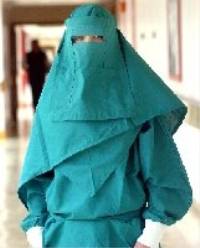
Muslim women booking into hospital for operations can now respect their religion by wearing a burka-style gown.
The 'Inter-Faith Gown' is the brainchild of Karen Jacob, the linen services manager at Lancashire Teaching Hospitals NHS Foundation Trust.

It is the first such gown to be introduced in the country and patients at Preston and Chorley hospitals will now have the opportunity to wear it if they wish.

Ms Jacob said: "I noticed a gap in the market and thought that it would be great if there was a gown that helped to preserve a patient's modesty."

The gown provides extra comfort and cover for patients undergoing medical procedures, and whose culture or religion requires them to be more modestly clothed.

Trials of the gown have already been carried out at Royal Preston Hospital and the response has been overwhelming.

It will be available from November 1 and will be manufactured by Interweave Textiles.

There has already been considerable interest in it from other NHS Trusts.

Ms Jacob and Interweave Textiles were brought together by TrusTECH – the NHS organisation that manages innovation for the North West NHS.

US Muslims face growing suspicion


Muslim leaders cite Bush's recent comments as not helpful


American Muslims have blamed politicians and the media for the US public's increasing hatred and fear of Islam in the five years since the September 11 attacks.

"The trends of Islamophobia unfortunately are worsening," Abdul Malik Mujahid, chairman of the Council of Islamic Organisations of Greater Chicago, said at the start on the annual meeting of the Islamic Society of North America (ISNA) on Friday.

"During the last five years the Muslim community has been scrutinized by almost all branches of the government and the media to the extent that more than half a million Muslims have been directly touched by this process."

"They continue to face dehumanization and a great trend of Islamophobia," Mujahid said.

Mujahid cited George Bush's recent remark that if terrorism is not beaten in Baghdad then Americans will have to fight it in their own streets as a remark that casts suspicions on Muslims in their own country.

Lack of understanding

The ISNA annual meeting is the largest yearly gathering of US and Canadian Muslims.

Ingrid Mattson, newly elected president of ISNA and the first woman to head the group, agreed that there was a continuing level of problems faced by Muslims, but said that there was also a growing level of education and understanding acros civil society.

This she said finds Muslim leaders sometimes hard pressed to keep up with demands for speeches and other outreach opportunities.

"Hollywood and popular culture in general seem to have done a better job of putting a human face on Muslim adherents than the news media," Mattson said.

September 11 anniversary

Almost 3000 people died when members of al Qaeda, a global Islamic group, flew two passenger planes into the World Trade Centre in New York and another into the Pentagon in Washington on September 11, 2001.

Western-born Muslims and converts have played an increasing role in armed Islamic movements worldwide since then.

British-born Muslims have carried out attacks in London and others have travelled to Iraq to fight US and British troops.

In 2004 a group of Moroccan Muslims killed nearly 200 people in Spain when they blew up a train in Madrid.

In 2005 a Belgian woman convert to Islam, Muriel Degauque, travelled to Afghanistan to carry out a suicide bomb attack against US troops.

In August 2006 British police arrested 22 British Muslims on suspicion of planning to blow up several transatlantic airliners.

Also in August, German police said that two Lebanese Muslims had attempted to blow up a train in Germany.


Turkey : Islamic swimsuit for conservatives
September 1, 2006

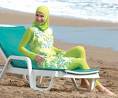
Mehmet Sahin, a Turkish businessman has claimed to have prepared the world’s first Islam-inspired swimsuit to cater to the demand of well-heeled Muslims.

He said that his firm is preferred by wives of conservative politicians and even though it is a small market but has been growing.

His swimsuit resembles shiny track-suits with stretchy hoods and they remind of the swimwear worn by Australian swimmer Annette Kellerman who made and wore it in 1906.

Sahin had designed his first swimsuit for men when he was studying law in Istanbul since he became bored of wearing other clothe while going for swimming.

His brand Hasema has become famous in Turkey and 40,000 swimsuits were sold in 2005 and he expects to sell up to 50,000 this year.

Many Turks have been surprised to see Islamic bathing suit on Turkish beaches since bikinis are a common sight there.

Sahin has already set his eyes on markets like United States, Egypt, Jordan, Saudi Arabia and Germany and he even has plan to organize a fashion show in Cairo next year.

Stereotyping is leading to terror, says first Muslim Miss England

Last updated at 16:13pm on 31st August 2006

Comments

The first Muslim to be crowned Miss England has warned that stereotyping members of her community is leading some towards extremism.

Hammasa Kohistani made history last year when she was chosen to represent England in the Miss World pageant.

But one year on, the 19-year-old student from Hounslow feels that winning the coveted beauty title last September was a "sugar coating" for Muslims who have become more alienated in the past 12 months.

She said: "The attitude towards Muslims has got worse over the year. Also the Muslims' attitude to British people has got worse.

"Even moderate Muslims are turning to terrorism to prove themselves. They think they might as well support it because they are stereotyped anyway. It will take a long time for communities to start mixing in more.

"People may feel I am just a sugar coating on the situation. I am a symbol to show it's not really that bad.

But at the same time, she said, "there is this hostility" which comes "mainly from the Government".

The Prime Minister told MPs last month that moderate Muslims were not doing enough to tackle extremists in their own community.

Miss Kohistani said: "Tony Blair addressed Muslims in particular, telling them that they need to sort out the problem within. That was a huge stereotype of the Islamic community. Even the more moderate Muslims have been stereotyped negatively and feel they have to take actions to prove themselves.

Born in Uzbekistan and raised in Afghanistan, Miss Kohistani divided Muslim opinion when she entered and won the Miss England pageant in Liverpool.

Several community leaders openly declared her to be betraying the laws of Islam while radical Muslims sent the teenager and her family death threats.

But after a busy year travelling around the world as an ambassador for England, Miss Kohistani said she feels Muslims are unfairly being branded as terrorists.

She added: "For a Muslim to represent England is asking for controversy at the moment. I feel after everything that's happened Muslims are being stereotyped negatively. The whole community has been labelled and, whether they are guilty of crime or not, they are getting penalised for it.

"I like being in the limelight because people can look at me and see I am a Muslim but good. Most of the people being pinpointed are judged by their outer appearances and people assume because they are Muslim and have a beard they have done something wrong."

She continued: "The bridge I have made is slowly being broken by more and more wars. Now the Iran situation is brought up and another Islamic country is under scrutiny - and the recent Heathrow scare. I guess I am needed even more now than last year to an extent because of what has happened.

"It is not for me to answer how to get people to turn away from terrorism. The politicians don't know what to do and I am just a 19-year-old."


Analysis: Muslim-Americans turn to law
William Fisher

August 31, 2006

-- His name is Junaid Ahmed. He is 24 years old. And he is among a rapidly increasing number of first generation Muslim-Americans who have decided to pursue careers in the law.

Ahmed, who was born in Chicago, Illinois, after his parents emigrated to the US from Pakistan in 1973, is a second-year student at William and Mary law school in Williamsburg, Virginia. He told us he chose the law over more traditional first-generation Americans' choices - medicine, science and engineering - because he cares deeply about human rights and civil liberties.

When he graduates from law school in 2008, he says he hopes to join the legal staff of an international human rights organization, and also do some teaching.

Ahmed says he is "worried about the politics of fear" that the administration of President George W. Bush has encouraged since the terrorists attacks of September 11, 2001. He adds that "Many Muslims in America are being routinely harassed and stereotyped" and "might feel more comfortable with lawyers who understood their language, culture and customs."

He says his personal experience is that, despite denials from the Department of Homeland Security and the Department of Justice, these agencies "are practicing ethnic profiling on a routine basis." He recalls returning to the US from Pakistan several weeks ago, just after the alleged airliner-bombing plot was announced in London.

"Individuals and families with small children who seemed to look South Asian or Middle Eastern were routinely taken out of the usual waiting lines and questioned for hours" by agents of the Transportation Safety Administration, a DHS agency that is in charge of airline security. "And they were the only ones questioned," he claims.

Active in human rights issues ranging from the crackdown on civil and political liberties worldwide to global economic justice during his undergraduate study at Old Dominion University in Norfolk, Virginia, Ahmed currently serves as pro-bono director of communications for the National Muslim Law Students' Association, formed in 2002, as well as an Executive Board Member of the Domestic Violence Resource Project, based in Washington, DC.

Another organization, The National Association of Muslim Lawyers, was launched in California in 1996 with 24 members, and now has 500. It actively partners with the NMLSA. And half the 100 members of the Bay Area (California) Association of Muslim Lawyers are law students, a further sign of the substantial increase.

A spokesperson for the NMLSA, Rufiath Youssef, told us that firm numbers of Muslim law students are hard to come by because law schools and law firms do not ask an applicant's religion. But there are currently Muslim law student organizations at approximately 30 US law schools from Berkeley to Yale.

Youssef says her organization currently has 249 subscribers, "with at least 50 joining last year alone." Members include law graduates, law students and college students interested in law.

She told us, "After 9/11 there came a shocking realization that there were not enough Muslims in the profession to protect the rights of Muslims both within the US and also the international community. And, that those who did not profess the Muslim faith may not understand the subtle dimensions and intentions of those who practiced their faith or culture in a manner that peripherally seemed un-American, when in reality no treason was intended."

She cites the Muslim obligation to give to charity, one of the five pillars of Islam. "A Muslim may send money to another country or organization and be arrested for allegedly materially aiding a terrorist country. In such a situation, a Muslim lawyer could identify their intent in such an act, while being aware of the legal mechanisms to secure their release."

Youssef told us, "9/11 certainly impacted upon the career choice of many Muslim students. Moreover, there is an acknowledgment amongst the American Muslim legal community, particularly those working in the civil rights areas, that they are in essence amongst the first generation of the current Muslim civil rights movement. Like Brown v. Board of Education, some of the precedents that will be set in relation to Muslims and their plight will be set by those who struggle in this cause today."

However, she adds, "Not all Muslim Americans entering law now are intending to join in the cause. Many will be doing it for exactly the same reason as any other American student; namely, fame, fortune, a comfortable lifestyle or an interest in a particular legal area. And in reality it would be foolish if Muslims limited themselves to one field alone. Times will inevitably change, or at least this is my hope, and when it does, I, with many others in the Muslim community, hope that Muslims will contribute to society via expertise in various areas of law."

This view is supported by Samer Shehata, assistant professor of Arab politics at the Center for Contemporary Arab Studies at Georgetown University. He told us, "I do not doubt that harassment experienced in the period since 9/11 has increased Muslim-Americans' interests in issues such as discrimination, civil rights, and the law. But it is also the case that as the children of immigrants grow up [and as their parents become more settled and established], they increasingly attend colleges and universities."

But the motivations of NMLSA members appear to lean heavily toward the civil liberties area.

Typical is Omar Khawaja, a JD candidate at Catholic University of America, Columbus School of Law in Washington, DC. He says, "After 9/11 and the ensuing debate over whether it was possible to be a practicing Muslim and patriotic American, it was clear to me that policy makers in Washington DC needed greater input from Muslim Americans. While working on Capitol Hill, I decided that law school would help me become a better advocate for Muslim and Muslim American causes. Despite the circumstances, I'm grateful at having the opportunity to work in the legal field and make a positive contribution to society as a Muslim American."

This attitude is being expressed in a variety of ways. For example, lawyers and law students are going into the community to teach Muslims about civil rights. In Santa Clara, California, a legal clinic at a local mosque offers free community consultations. And Muslim lawyers are taking on cases such as the Muslim woman who says she is on the Transportation Security Administration's no-fly list in error, and another who says she lost her job because she wore a hijab, or headscarf.

William Fisher managed economic development projects in the Middle East for the US State Department of the US Agency for International Development. He is a regular contributor to the Middle East Times and can be contacted at www.billfisher.blogspot.com

Literary stars convert to Islam for school

ANKARA, Turkey, Aug. 31 (UPI) -- Classic literary characters such as Pinocchio and Tom Sawyer have been converted to Islam as part of a controversial move for the Turkish school curriculum.

The move by Islamic publishing houses to insert references to the Islamic faith throughout literary classics provided to schools throughout Turkey, which is a secular state, has drawn strong opposition from the country's leaders, said Britain's Telegraph newspaper.

Turkey's first Islamic premier, Recep Tayyip Erdogan, has demanded that the offending publishers be reprimanded for their decision to insert the religious references, as well as for various slang and insulting terms aimed at the president and the prime minister.

There has been no reported response from the publishers regarding the incident thus far and Huseyin Celik, Turkey's Education minister, has sworn to take legal action against any further publications.

"If there are slang and swear words, we will sue them for using the ministry logo." he told the Telegraph.

Pleasure Marriages in Sunni and Shi'ite Islam
By Aluma Dankowitz*.

Introduction

For over a decade, the phenomenon of marriage without commitment, called misyar marriage, has been spreading throughout the Sunni Muslim world, particularly in Saudi Arabia and the other Gulf countries. [1] In such marriages, the woman relinquishes some of the rights that Islam grants her, such as the right to a home and to financial support from her husband, and, if he has other wives, the right to an equal part of his time and attention. In most cases, these marriages are secret, without the knowledge of the man's other wives - even though a marriage contract is drawn up in the presence of witnesses, and although consent is commonly obtained from the woman's guardian, and the marriage is registered and documented at the courthouse. Demand is high for misyar marriages on online matchmaking sites, as well as through services using text messages and email. [2]

Due to the substantial increase in the number of misyar marriages in recent years, and in light of the arguments over this issue among clerics as well as among the public, the Institute of Islamic Religious Law, which is a part of the Muslim World League in Mecca, decided to address the matter.

In a fatwa issued on April 10, 2006, the institute permitted marriages in which "the woman relinquishes a home, financial support, and her part [in joint life] with her husband, or part of it, and consents to the man's coming to her home whenever he wants, day or night."

The fatwa also permitted marriages known as "friend" marriages, in which "the girl remains at her family's home and she and the man meet any time they want, either at her home or anywhere else, as they have no [joint] home and livelihood." [3] Such marriages are aimed primarily at meeting the needs of young Muslims in the West, who are influenced by male-female relations around them but who want their relationships to have religious legitimacy.

Advocates of misyar marriage argue that such marriages meet the needs primarily of women who have little chance of finding a husband for ordinary marriage. These include widows, divorcees, and especially single women who are beyond marriageable age [ awanis]. [4] Those opposed to misyar marriage - including the vast majority of women - claim that it exploits the difficult social situation of unmarried women in Arab society, and is designed primarily to sate men's lust, with no concern whatsoever for women's needs and the needs of children born of these marriages.

These non-binding marriages are to a great extent similar to the "pleasure marriages" (in Arabic, mut'a; in Persian, sigheh) that have been accepted in Shi'ite Islam since its beginnings. Unlike misyar marriage, mut'a marriage in Shi'ite Islam is contracted for a particular period of time, and divorce is not necessary to end it. For the most part, misyar marriages also do not last, and ending them by divorce is no problem. Over the years, mut'a marriage has been a major bone of contention between Shi'ite Islam and Sunni Islam - the latter seeing it as licentiousness in religious guise. The Sunni clerics reject the comparison between mut'a and misyar marriage, stressing misyar's formal aspects which meet religious requirements; however, at the same time, they disregard its essence as well as the fact that such a marriage is no basis for a family.

Based on their generally critical approach to mut'a marriage and to marriages contracted for a limited duration, the April 2006 fatwa by the Institute of Islamic Religious Law banned marriages in which the man declares that the marriage will be null and void if the woman becomes pregnant. The institute clarified that "such marriages are flawed, as they contain an element of pleasure [ mut'a], and since setting a particular time period such as one month, or one that is not known [in advance] like the date of the birth of children, makes the marriage mut'a, and it is unanimously agreed that mut'a marriage is forbidden."

Another kind of marriage banned by the institute in its fatwa is "marriage with intent to divorce" - that is, marriage in which "the husband conceals in his heart [an intent] to divorce the wife after a certain period, such as 10 days, or after a period unknown [ahead of time] such as the date of the end of his studies or the date on which he will fulfill the purpose for which he came [to the place where he met the woman]." Although some clerics permit this kind of marriage, the fatwa clarified that "the Institute of Islamic Religious Law has prohibited it, because it includes 'deception and fraud', since had the woman or her guardian known this ahead of time, they would not have agreed to this marriage contract." [5]

This paper addresses various aspects of misyar marriage and presents the approaches supporting it and opposing it:

The Scope and Characteristics of the Phenomenon

In recent years, modern communications technology has increased the spread of misyar marriages. Personal ads on the online Islamic matchmaking sites reveal the nature of these marriages. The following are several examples:

"Young man, 26, from the UAE, seeks misyar marriage to a divorcee, widow, or single woman. Age not an issue."

"Young man, 21, excellent monthly income, seeks misyar marriage as soon as possible to single girl up to age 21 and up to 70 kg, living in Jeddah."

"Egyptian doctor, 45, seeks pretty, white Saudi woman from Jeddah, age 28-40, for misyar marriage. I will visit her twice a week."

"Egyptian accountant, 30, seeks misyar marriage with Saudi woman. Age, appearance, whether she has children, and whether she is a widow, single, or divorced unimportant. What is important is her ability to satisfy the needs of a man who desires things permitted by religion (halal)."

"Young, highly educated man, 29, energetic and with a winning personality, seeks single woman or widow aged 18-50 living in Syria, for misyar marriage."

"Saudi clerk, 38, from a well-known family, seeks pretty, white, delicate businesswoman or clerk for misyar marriage. With Allah's help, if things work out, the marriage will be official."

"Young religious man, 29, working in the UAE, seeks misyar marriage with pretty, religious girl from a well-known tribe, age 14-19. I will pay her 1000 dirhams a month." [6]

An additional channel for those seeking misyar marriage is the traditional matchmaker. A veteran Saudi matchmaker told the London daily Al-Sharq Al-Awsat that since the publication of the fatwa permitting misyar marriages, she had received at least 15-20 requests per day from men of various ages for such marriages, from men under 20 who did not object to women over 40, up to men in their 70s. She said that the young men who marry women aged 40 and 50 remain with them until they finish their studies. The marriages are kept secret from the man's parents, and when he completes his university studies, he is married to another woman chosen for him by his family. She said that half of the requests for misyar marriages are from young men in their 20s. [7]

Since the fatwa was issued, the number of misyar marriages has increased in Jeddah, particularly among women aged 30 to 40. According to Sheikh Abd Al-Karim Al-Ghamidi, who oversees and coordinates all marriages in Jeddah, most of the women seeking these marriages are businesswomen, teachers, doctors, nurses, and widows. [8]

Saudi author Dr. Ibtisam Halwani, who researched the phenomenon and published a number of articles on the subject, found out the following about misyar marriages: Most of the women in these marriages are non-Saudis, and are from a certain few large cities; in some misyar marriages, the woman relinquishes only some of her rights; many marriage contracts are made not in the presence of the woman's guardian, but in the presence of a public official; some women in misyar marriages demand a divorce after a while so as to remarry and obtain a new dowry; many men set conditions for the woman, such as "if the knowledge of the marriage gets out, you are divorced," or "if you get pregnant, you are divorced"; many of the men divorce when it is even suspected that news of the marriage has reached the families; many students from out of town seek misyar marriage; and most misyar marriages end in divorce. [9]

A poll conducted by Dr. Halwani of 64 women working in Jeddah, found that 81% of them were against misyar marriage; 9% were absolutely in favor of it; and 8% were in favor but only under specific circumstances.

Among the reasons given by the women who were in favor of misyar marriages were: the marriages meet the woman's emotional need; the woman is freely available for her other obligations; there is minimal obligation towards the husband; and the woman remains with her family and does not lose this situation if the marriage fails, because separation is simple in the case of incompatibility.

Among the reasons given for opposing misyar marriage were: the woman does not have rights like an ordinary married woman; there is no sense of security and stability; the woman is not respected; the woman is dependent on the wishes of her husband; such a marriage can force a woman not to have children; a woman feels like a sinner because the marriage is secret, or because there are restrictions on announcing it; and there is fear of problems that might arise when the man's other wife hears about her husband's misyar marriage.

The poll's respondents said that misyar marriage had the following effects: harm to children, because there is no basis for a family; harm to the woman, because the husband has no responsibility towards her; increase in divorce, particularly after the marriage becomes known to the husband's other wife; economic problems for women who have children from these marriages; social criticism of women for having agreed to such a marriage; and women's emotional suffering due to constant fear of the results of this marriage. [10]

Sheikh Al-Qaradhawi: "The Woman is Entitled to Relinquish Some of Her Rights [If She Wants to]"

Like many Muslim clerics, the well-known Islamist Sheikh Yousef Al-Qaradhawi maintains that misyar marriages are permitted by religious law, although they are not the preferred and encouraged form of marriage. The following are his statements on the issue, on his weekly program Shari’a and Life aired on Al-Jazeera TV: [11]

"Misyar marriage meets the need of some women. A woman to whom Allah has given money but has not given an opportunity to marry at a reasonable age consents to it... These marriages fulfill all the conditions [for marriage in Islam]... Perhaps society does not accept them, [but] there is a difference between whether the marriage is socially acceptable and whether they are permitted from the point of view of religious law. There are marriages that are not socially acceptable [but are] permitted by religious law... such as cases in which a woman marries her servant or her driver... a young woman marries an older man, or an older woman marries a young man..."

With regard to the issue of the secrecy of misyar marriages, Al-Qaradhawi said: "In Saudi Arabia, [marriages] are registered and documented by the judge, [and the same is true] in the UAE... That is, the marriage is not necessarily secret... After all, if two witnesses witness the marriage, it is already no secret. In addition, in the Gulf states [women have] a guardian. Where is the secrecy in a matter in which there are witnesses and a guardian[?]...

"In the Maliki school of religious law, secret marriages [are invalid], but the other schools settle for there being witnesses. In my opinion, witnesses are the minimum requirement for a legal announcement [of marriage]. Some people do not want to announce their marriage for various reasons... I know several very senior clerics who married [in misyar marriages] and would go to their [new] wives, and his children and his other wife never knew this until after their death...

"The media attack has turned polygamy into a grave crime. The woman thinks that if her husband takes another wife, it is a death sentence for her. How, then, can he tell her this? He doesn't want to kill her, and does this [secretly] in order to protect her, since she will object to this and will perhaps collapse... In this situation, there is nothing preventing him from marrying and hiding it from his wife..."

In answer to the question: "Doesn't such a marriage open the door to extortion, because perhaps a poor man will marry a [wealthy] woman and extort her?" Al-Qaradhawi answered: "Extortion can occur even in ordinary marriages. I receive letters and phone calls from women with jobs whose husbands are extorting them and taking their wages. They [i.e. their husbands] even keep them from opening a [bank] account in their names, and from helping their families... [In misyar marriage], the woman relinquishes [some of her funds] to the man of her own free will. This situation is not extortion...

"The woman is entitled to relinquish some of her rights [if she wants to]... In the biography of the Prophet Muhammad, it is related that when Sawda bint Zam'a, the wife of the prophet after Khadija, grew old... she relinquished her day [for having relations with the Prophet] in favor of 'Aisha [his beloved young wife]..."

Regarding the question of children and family life in misyar marriage, Al-Qaradhawi said: "There is nothing that forbids there being children from a misyar marriage... Aren't there husbands who are always traveling and leaving the children with their wives? On the contrary, there are also husbands that are [at home]... and barely see the children. The husband comes in the middle of the night when the children are already asleep, and when they go to school in the morning he is asleep, and he gets up in the afternoon. He doesn't see his children day or night. This happens; does it invalidate the marriage?..."

With regard to the difference between misyar marriage and mut'a marriage, Al-Qaradhawi explained: "Mut'a marriage is for a limited period of time. It is a marriage in which the man pays the woman for the time... If they marry for a week the payment is for a week; if they marry for a month the payment is for a month, and if they marry for a year [the payment is for a year]... After the specified time period is up, the marriage is null and void... There is no need for divorce. Misyar marriage, in contrast, cannot be annulled except by divorce initiated by the husband or by the wife, or by a judge's ruling... Mut'a marriage is of course forbidden among the Sunnis."[12]

Misyar Marriage - Invalid Because It is Marriage With Intent to Divorce

Abd Allah bin Na'if Al-'Utaybi, an opponent of misyar marriage, explained in his column in the Saudi daily Al-Riyadh that misyar marriage is actually marriage that includes the intent to divorce. As mentioned, the Institute of Islamic Religious Law banned marriage contracted with the intent to end it in divorce, because it involves "deception and fraud."

According to Al-'Utaybi, "misyar marriage discriminates against the woman. [True,] it does have conditions [according to religious law] for marriage, but unfortunately it is not marriage at all. It is marriage with the intent to divorce... and the proof of what I say is that we have never found and never heard of a misyar marriage that lasted. They last for a while, and then the man divorces his helpless wife. What does it mean when a man who contracts a misyar marriage hides his wife?... What does it mean when a man contracts a misyar marriage far from the region in which he lives? And what does it mean when the man refuses to have children with this wife?... Women are deprived of their rights in this marriage, because the husband has no home that she can settle in; she has no children from him; and she cannot express her opinion. She is destined only to sate the man's lust...

"Would you want your daughter, your sister, or a woman under your protection to marry in this fashion? Don't ask for anything that you would not wish upon yourself." [13]

Misyar Marriage is No Different From Mut'a Marriage

In the Saudi daily Al-Watan, Maram Abd Al-Rahman Makawi, a Saudi author, explained that there was no difference between misyar marriage and the mut'a marriage forbidden by Sunni Islam. She wrote: "What is strange is that we very often condemn those from other schools of religious thought [i.e. Shi'ites] because [they agree to] mut'a marriage. Even though I am completely opposed to this kind of marriage, I respect the fact that they call things by their name...

"A few years ago, I heard Sheikh 'Abd Allah bin Muni' answer a question regarding misyar marriage, and say that 'the cowardly man turns to misyar marriage... A man with self-confidence must take numerous wives according to religious law, and announce this before Allah and the public.' The sheikh was right. Islam has permitted the man to take two, three, or four wives, provided that he treats them fairly with regard to livelihood, marital relations, a home, and behavior towards them... What more do men want?...

"If you go to the marriage websites and look through the papers that publish marriage ads, you will find single men aged 21-29 (primarily in Saudi Arabia) who are looking to contract misyar marriages. Naturally, they will marry someone who has financial capability, who is for the most part older than they... And what happens to the young women in the [same] age group? They marry men who have passed marriageable age... Does a young man aged 24 intend to remain with a woman aged 40 or 50? If the answer is no, then this is a pleasure marriage [mut'a]. And when he divorces her and marries another in ordinary marriage, he has already acquired bad habits from his previous marriages - such as not taking responsibility, and relying on others..." [14]

Misyar Marriage - Worse Than Prostitution

'Aisha Al-Mari wrote in her column in the UAE daily Al-Ittihad: "There is no doubt that the chauvinist societies find justification for depriving women and children of their rights in favor of the man's free enjoyment. We don't even call this prostitution, because prostitution is [at least] for pay... There must be no exploitation of social problems such as the problem of older single women such that the woman relinquishes her rights and the rights of her children. Society must examine the roots of the problem and deal with them - and not skip over them with an additional deprivation of women's rights..." [15]

Dr. Rola Dashti, who heads the Kuwait Economic Society, and was the first Kuwaiti woman to register as a parliamentary candidate, [16] also addressed the social aspect of the phenomenon: "Misyar marriage harms the foundation of the family, and of family stability. The rights that the woman relinquishes are fundamental to building a stable family... There must be no use of the issue of 'older single women' to force the woman to relinquish more rights. It is fitting to deal with [this problem] politically and socially, and not to choose the easy way such as misyar marriage... Even a woman in an ordinary marriage suffers from many problems - for example, during divorce - not to mention a woman in a misyar marriage... The time has come for enlightened clerics to deal with the extremist views... and not abandon women in the struggle. There is no escape from launching an attack against the extremist thought that is harming society and restricting the development of the woman in Arab society." [17]

"The Children of Misyar Marriages are Children Who are Oppressed and Hurt"

In another article, Dr. Ibtisam Halwani discussed the situation of the children of misyar marriages: "Why don't misyar marriages turn into ordinary marriages and get announced - instead of being secret marriages that show the man's cowardice and selfishness? And what about the children? Is it permissible for a man to prevent his wife in a misyar marriage from having children? Of course it is forbidden. So what happens when the man brings children to the world from a number of homes? And even if they are the children from one wife to whom he is married in a misyar marriage, how will he oversee the education of his children in this home when he is there some days and other days and weeks he is not?

"If many fathers who live in one home [only] are careless regarding the weighty tasks of life, what will they do when they have a number of homes and many children?... Is it logical that they will treat the children of the misyar wife like they treat these children's mothers, that is, in accordance with circumstance, needs, and desires? Who will raise [the children of misyar marriage] and who will pay the expenses of their housing, food, school, and all the other necessities of life? How will the father monitor their studies, and how will he handle their problems?... And if he divorces their mother, what will happen to them? The children of divorced women from ordinary marriages are known, and their father is known... but who knows the fathers of the misyar children?

"If this marriage is based on concealment, or on a limited announcement [of the marriage, only to the woman's closest relatives], what is the status of women in misyar marriages among her other relatives, such as her aunts, and even among her friends and acquaintances? Will they hide their pregnancy and then hide their children? And even if the woman in misyar marriage is not a Saudi or has no family, don't her sons from this marriage need supervision and care? On the contrary; perhaps her situation is worse, particularly because there is no deterrence preventing the husband from abandoning his son's rights...

"Why not allow sons of misyar marriages and sons of ordinary marriages to have the same opportunities in life?... Doesn't this difference engender hatred and a sense of injustice among the children from misyar marriages because of how they are treated by the children from ordinary homes who have care, livelihood, supervision, and love, that they themselves do not receive? Don't they feel anger because they see their fathers rarely, and enjoy no rights, not even basic ones?...

"The children of misyar marriages are children who are oppressed and hurt. Society will engender hundreds of them in the future, because of the sweeping permission for these marriages. Are we ready to deal with this phenomenon in light of the many and various social problems that [already] exist?..." [18]

*Aluma Dankowitz is Director of MEMRI's Reform Project.


[1] The term misyar in colloquial Arabic in the Gulf states means "visit." The term shows that these marriages are based on visits by the husband to the wife, and not on life together in one home. In other Arab states the phenomenon also exists, but is called by other names. See Al-Riyadh (Saudi Arabia), April 30, 2006; Al-Arabiyya TV, April 28, 2006.

[2] The Saudi daily Al-Watan, for example, reported on emails offering services providing religiously valid misyar marriages to a virgin for 4,500 riyals, and to a non-virgin for 3,000 riyals. See Al-Watan (Saudi Arabia), April 29, 2006.

[3] http://www.themwl.org/Fatwa/default.aspx?d=1&cidi=162&l=AR&cid=13, April 10, 2006.

[4] The phenomenon of the "older single woman" is extremely widespread in Arab society. Saudi author Maram ‘Abd Al-Rahman Makawi has pointed out a number of the main causes of the problem in Saudi society: objections on the part of the woman's guardian to her marriage due to tribal, regional, racial, color, or familial considerations; objections to her marrying a non-professional or a manual laborer; exaggerated dowry demands; objections to her marrying someone she loves in order to punish her; and objections to her marrying a non-Saudi. See Al-Watan (Saudi Arabia), March 5, 2006.

Divorce is also very common in Arab society. The novel Girls of Riyadh, by Saudi author Rajaa Al-Sanie, focuses on the difficulties faced by divorced women. The book tells of the love lives of four young Saudi women attending the University of Riyadh. Two of them are divorced, one of whom was in a marriage arranged by her family after meeting her future husband only once. She moved with her husband to Chicago, so that he could complete his studies, but her husband showed no interest in her and had an affair with a Japanese-American woman. She became pregnant in order to try to win his affection, but after hearing the news her husband divorced her and sent her back to her parents in Riyadh, with her child, where her family prevented her from leaving the house so as to avoid gossip. Another girl had been engaged to a man who divorced her because she gave herself to him before their official wedding ceremony; she then fell in love with an upper-class Saudi bachelor who would not marry her because she was divorced. After he married a cousin of his, he offered to continue their relationship, but she refused, and ended up marrying her cousin. The other two girls also had many troubles in their personal lives, and only one had a happy end to her story. For a complete synopsis of the book, see www.rajaa.net/v2/english.htm .

[5] http://www.themwl.org/Fatwa/default.aspx?d=1&cidi=162&l=AR&cid=13, April 10, 2006.

[6] The examples here are taken from the matchmaking website http://stones.jeeran.com/%D9%86%D8%A7%D8%AF%D9%8A%20%D8%A7%D9%84%D8%AA%D8%B9%D8%A7%D8%B1%D9%81%20%D9%88%D8%A7%D9%84%D8%B5%D8%AF%D8%A7%D9%82%D9%87/index.html. The site provides participants' email addresses and sometimes their telephone numbers.

[7] Al-Sharq Al-Awsat (London), April 25, 2006.

[8] Al-Madina (Saudi Arabia), July 13, 2006.

[9] 'Okaz (Saudi Arabia), June 6, 2006.

[10] 'Okaz (Saudi Arabia), June 6, 2006, May 30, 2006.

[11] http://www.aljazeera.net/channel/archive/archive?ArchiveId=90777

[12] Other differences between misyar marriage and mut'a marriage were discussed by Saudi university lecturer and cleric Dr. Muhammad Al-Nujeimi. In addition to the fact that misyar marriage is not - in contrast to mut'a marriage - limited in time, and divorce is required in the event of separation, in misyar marriage the man is forbidden from taking more than four wives, and if one of the spouses dies, the other has the right of inheritance. However, in mut'a marriage, Dr. Al-Nujeimi explains, the man can take more than four wives, because the marriage is not a complete marriage, as it lacks proper foundation and proper religious legal conditions and thus there is no right of inheritance between the spouses. See www.itijahat.com/news/news_p12.htm .

[13] Al-Riyadh (Saudi Arabia), June 5, 2006.

[14] Al-Watan (Saudi Arabia), April 26, 2006.

[15] Al-Ittihad (UAE), May 15, 2006.

[16] The Washington Post (U.S.), June 29, 2006, http://www.washingtonpost.com/wp-dyn/content/article/2006/06/29/AR2006062900063_pf.html http://www.zu.ac.ae/leadership2006/roladashti.aspx

[17] Elaph, April 18, 2006.

[18] 'Okaz (Saudi Arabia), June 20, 2006.


Islamic universities in Indonesia committed to fight corruption


Jakarta (ANTARA News) - Rectors of 15 Indonesian state-Islamic Universities/Institutes (UIN/IAIN) expressed their commitment here on Tuesday to fight corrupt practices by developing anti-corruption education and improving campus management, a rector said.

"We, Indonesia`s Islamic Universities/Higher Learning Institutes are committed to eradicate corruption through education," Prof. Dr. H. Azyumardi Azra, rector of Syarif Hidayatullah Islamic University told the press.

The rectors stressed their commitment after holding a meeting in Jakarta from Monday through Tuesday.

In expressing their stance against corruption, the rectors said they would show example of how to apply the anti-corruption education at all universities and applying good governance through development of education management in all campuses.

In addition, the rectors also urged the government to review laws, regulations and policies which could hamper development of the application of good governance to UIN/IAIN and other universities and to take stern actions against corruptors.

Azyumardi said, anti-corruption culture could be developed by teaching ways and means of corruption eradication.

"The materials on corruption eradication are already available and each university has its own right in how to teach them," the rector said, adding that the teaching of anti-corruption lessons is expected to begin in 2007 because the universities need preparations.

Azyumardi also expressed optimism that the development of the teaching of corruption eradication at universities would bring about a positive impact on the development of a good generation of future leaders.(*)

Copyright © 2006 ANTARA

August 29, 2006